
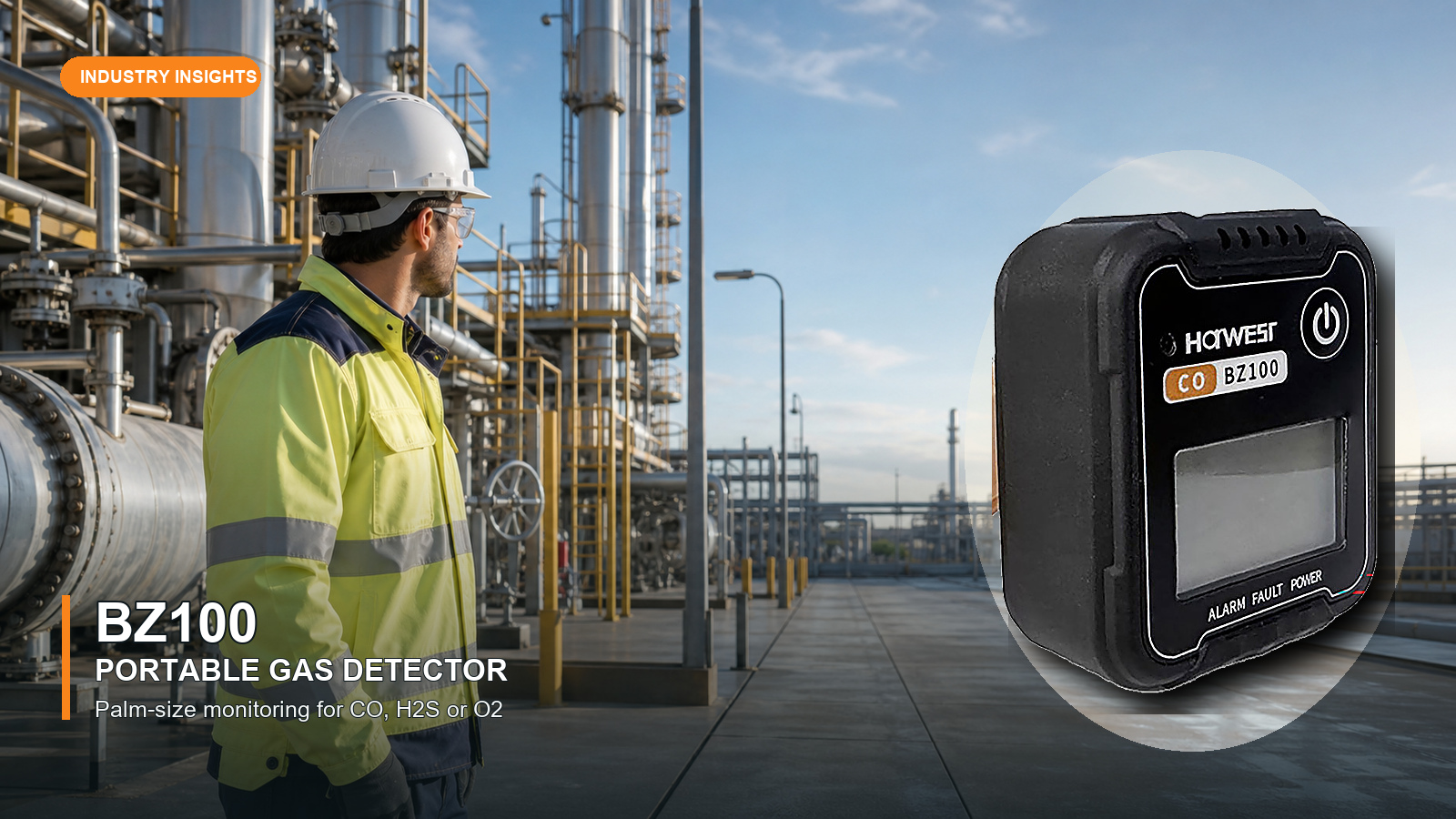
At the start of an industrial shift, the gas question is often not "what might be present?" but "which known hazard must this worker monitor all day?" That distinction is where a single-gas instrument earns its place. The BZ100 portable gas detector is designed for continuous CO, H2S or O2 monitoring in a palm-size, approximately 85g format.
This Industry Insights article looks beyond a feature list. It considers how a compact disposable detector fits into the decisions made before work begins, while a task is in progress, and when a site reviews alarm and exposure records.
When the Hazard Is Known, the Monitoring Task Can Be Clear
Multi-gas instruments are valuable when several atmospheric hazards must be checked together. A single-gas detector serves a different operating idea: the target gas has already been identified, so every part of the device can support one focused monitoring task.
For a worker assigned to a carbon monoxide area, an H2S risk zone, or a task where oxygen status must be watched, that narrower mission can reduce unnecessary complexity. It can also make toolbox talks more concrete because the team can discuss one gas, its alarm rules, and the required response.
A Small Instrument With a Defined Job
PESV describes BZ100 as an intrinsically safe disposable detector for continuous monitoring of CO, H2S or O2 in ambient air. The current product page lists an electrochemical sensor, natural-diffusion sampling, a wide-viewing-angle graphic LCD, configurable high and low alarms, and audible, visual and vibration signals.
Its published dimensions are 61.5 x 52.8 x 27 mm, with a weight of about 85g. Those numbers matter because a personal detector only helps when it is carried consistently and positioned according to the site's procedure.
| Decision point | Website-listed BZ100 information |
|---|---|
| Target gases | CO, H2S or O2, depending on configuration |
| Sampling and sensor | Natural diffusion; electrochemical sensor |
| Alarm channels | Audible, visual and vibration; 80dB at 10cm |
| Exposure functions | High/low alarms; STEL and TWA for toxic gases |
| Size and weight | 61.5 x 52.8 x 27 mm; about 85g |
| Protection and approvals | At least IP66; ATEX and IECEx listed |
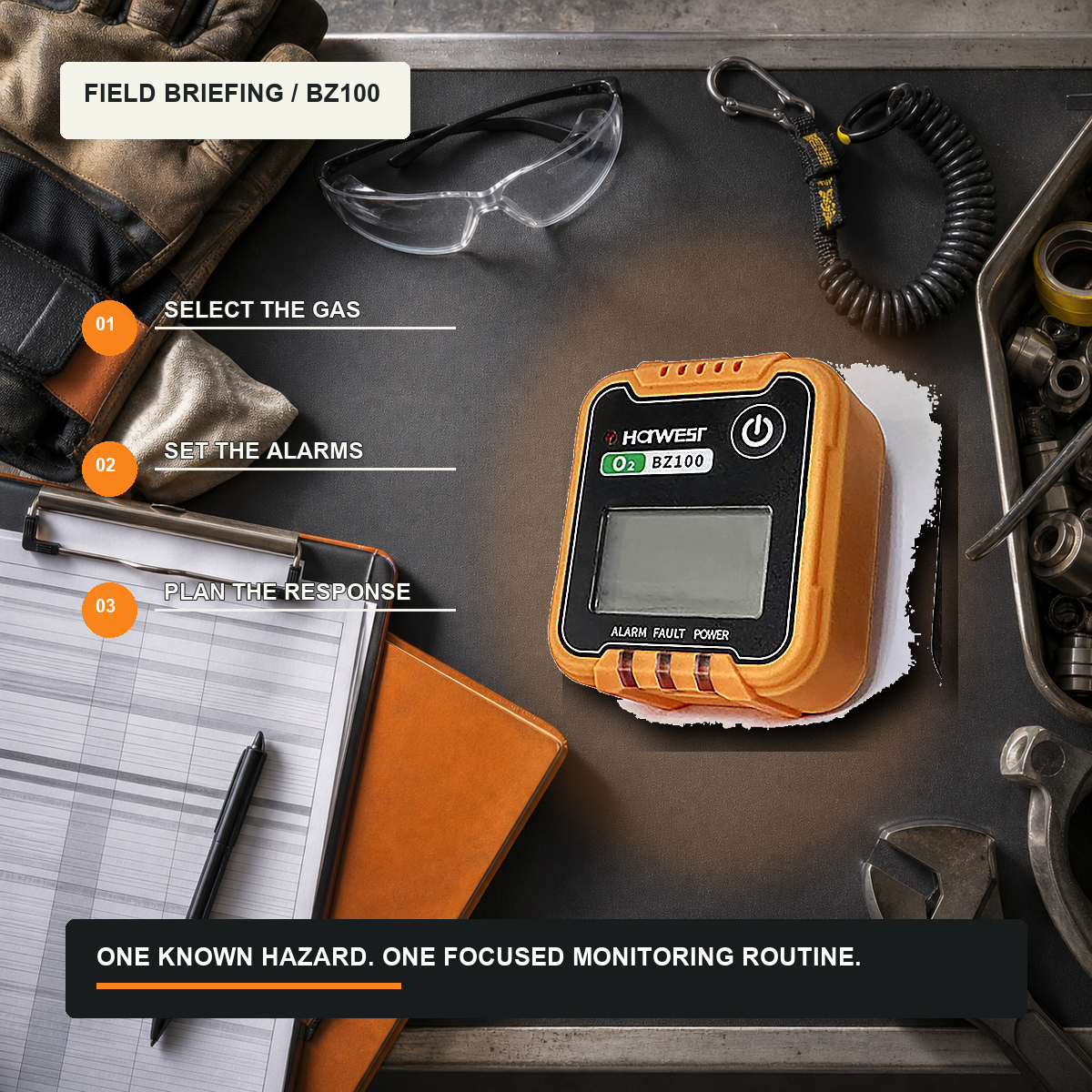
One Shift, Three Decisions
1. Before the Worker Enters the Area
The detector model is only one part of readiness. The team still needs to confirm the gas version, alarm points, inspection status, wearing position, expected work duration, and the action that follows an alarm. BZ100 includes automatic self-test after power-on and a low-battery alert, giving the pre-use routine clear device-status cues.
2. While the Task Is Underway
BZ100 displays real-time concentration and system status on its LCD. If a configured level is reached, sound, light and vibration provide three different ways to attract attention. For toxic-gas versions, the product page also lists STEL and TWA alarms, helping the device communicate short-term and time-weighted exposure conditions within the site's approved program.
3. After the Task Ends
The product information lists parameter setting, log storage and export, plus Bluetooth data upload and infrared communication with a host computer. Buyers should confirm the exact communication workflow and accessories for their selected configuration, especially when records need to support supervision, maintenance or incident review.
An Alarm Is a Workflow, Not Just a Sound
An 80dB alarm at 10cm is one published BZ100 specification, but volume alone does not create safety. The value comes from combining audible, visual and vibration indication with a response that workers already understand: stop, withdraw, notify, isolate, ventilate or escalate according to the site's risk assessment.
This is also why configurable high and low alarm points deserve attention during procurement. The correct values depend on the target gas, local regulations, company procedures and the work being performed. They should be defined by the responsible safety team, not copied from another project.
Where a BZ100 Deployment Can Make Sense
- Personal CO monitoring around combustion equipment, enclosed work zones and maintenance activities.
- H2S monitoring in oil and gas, wastewater, biogas and other sulfur-related environments.
- Oxygen monitoring where deficiency or enrichment is a defined concern.
- Contractor or visitor programs that assign a clearly identified single-gas risk.
- Distributor projects that need a compact, easy-to-explain personal monitoring option.
For H2S work in particular, buyers can compare their program with OSHA hydrogen sulfide resources while following all applicable local regulations and site procedures.
Disposable Does Not Mean Unmanaged
PESV describes BZ100 as a two-year disposable detector and lists a 3.6V, 1200mAh lithium battery. The published sensor lifespan is two years under the stated condition of two alarm minutes per day. That is a planning figure, not a reason to skip daily checks, documentation or replacement control.
A responsible deployment should track issue date, assigned worker or area, gas type, alarm settings, inspection results, exposure to harsh conditions, and end-of-service replacement. The product lifecycle may be simple, but the safety management around it still needs ownership.
A Better Buyer Brief Starts With Six Facts
- Target gas: CO, H2S or O2.
- Required measuring range and alarm points.
- Wearing position, shift pattern and work environment.
- Need for STEL/TWA records, log export or wireless data handling.
- Destination-market certification and documentation requirements.
- Replacement quantity, issue control and distributor support expectations.
BZ100 or a Multi-Gas Detector?
Choose by risk, not by the number of sensors. BZ100 is a focused option when one known gas must be monitored continuously. A portable multi-gas detector may be more appropriate when workers can encounter several hazards together or when pre-entry atmospheric testing requires a broader picture.
PESV offers both portable single-gas detectors and wider industrial gas detector options. Sharing the application, target gas, working conditions and alarm workflow allows the product team to compare configurations without forcing every project into the same detector format.
Frequently Asked Questions
Which gases can BZ100 monitor?
The current PESV product page states that BZ100 configurations can continuously monitor CO, H2S or O2. Confirm the required gas version, measuring range and alarm points before ordering.
Is BZ100 suitable for personal daily carry?
Its palm-size body, approximately 85g weight and three-way alarm design support personal monitoring use. Final suitability still depends on the site's gas risk, wearing procedure, environmental conditions and compliance requirements.
What should a buyer confirm about certification?
PESV currently lists ATEX and IECEx approvals and an intrinsically safe design. Buyers should request the documents relevant to the exact configuration and destination market before procurement.
Turning a Known Gas Risk Into a Clearer Routine
BZ100 is not intended to make a gas-safety program complicated. Its value is the opposite: one known gas, a compact personal detector, clear alarm channels, and a lifecycle that can be planned. For industrial buyers and distributors, the next step is to match that focused product idea with the actual hazard and response procedure.
Explore PESV Gas Detection Options
Review the BZ100 product page, compare portable single-gas detectors, explore industrial gas detectors, read about industrial safety applications, or contact PESV with your gas and project requirements.