
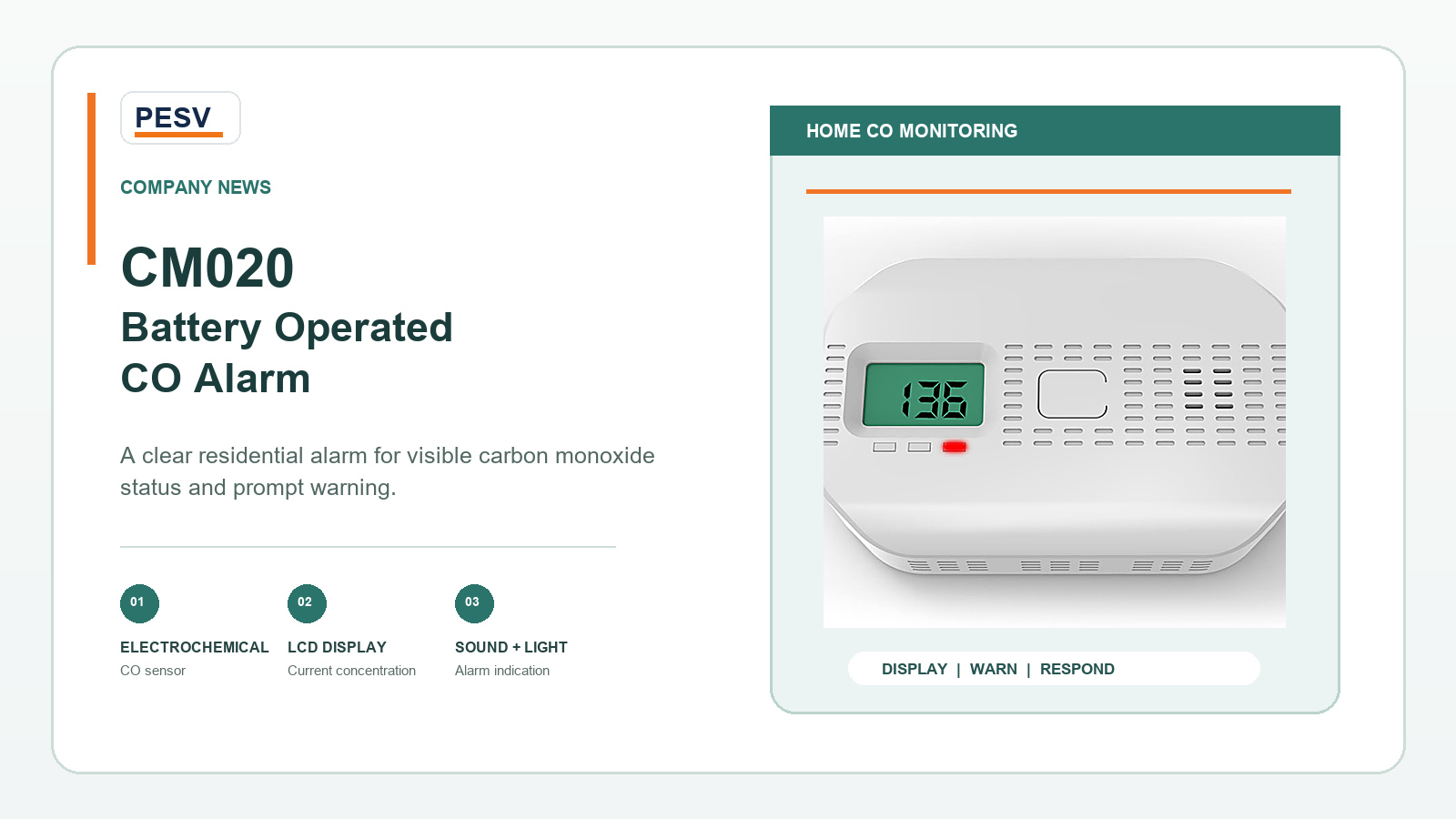
PESV is introducing the CM020 battery operated CO alarm for residential safety projects that need a clear way to monitor carbon monoxide. It is designed for distributors, installers, property teams, and home-safety buyers who want a focused alarm that makes the current CO reading easier to see and an abnormal condition easier to recognize.
Carbon monoxide cannot be identified by color or odor. A practical home-safety offer therefore needs a product that can sense the gas, present a useful status reading, and alert people when the concentration rises above the preset value.
PESV Adds a Display-Led CO Alarm Option
The official PESV product page describes CM020 as a carbon monoxide alarm with a high-quality electrochemical sensor. Its LCD display is designed to show the current carbon monoxide concentration value, giving users a more visible reference point during everyday safety checks.
When the concentration in the air is higher than the preset value, CM020 provides sound and light alarm indication. For channel partners, that creates a simple and credible product story: sense the gas, read the status, receive the warning, and follow a prepared response.
CM020 Product Information Listed by PESV
| Product point | CM020 information listed by PESV |
|---|---|
| Monitoring target | Carbon monoxide |
| Sensor | High-quality electrochemical sensor |
| Reading | LCD display for current carbon monoxide concentration |
| Alarm indication | Sound and light alarm above the preset value |
| Standard information | Meets EN50291 standard |
CM020 is a focused household CO alarm rather than an industrial monitoring system. This makes it suitable for buyers who are building a practical residential safety category for homes, apartments, rentals, hospitality rooms, or retrofit projects. Local installation requirements and the final project environment should always be confirmed before deployment.
From CO Reading to Alarm Response
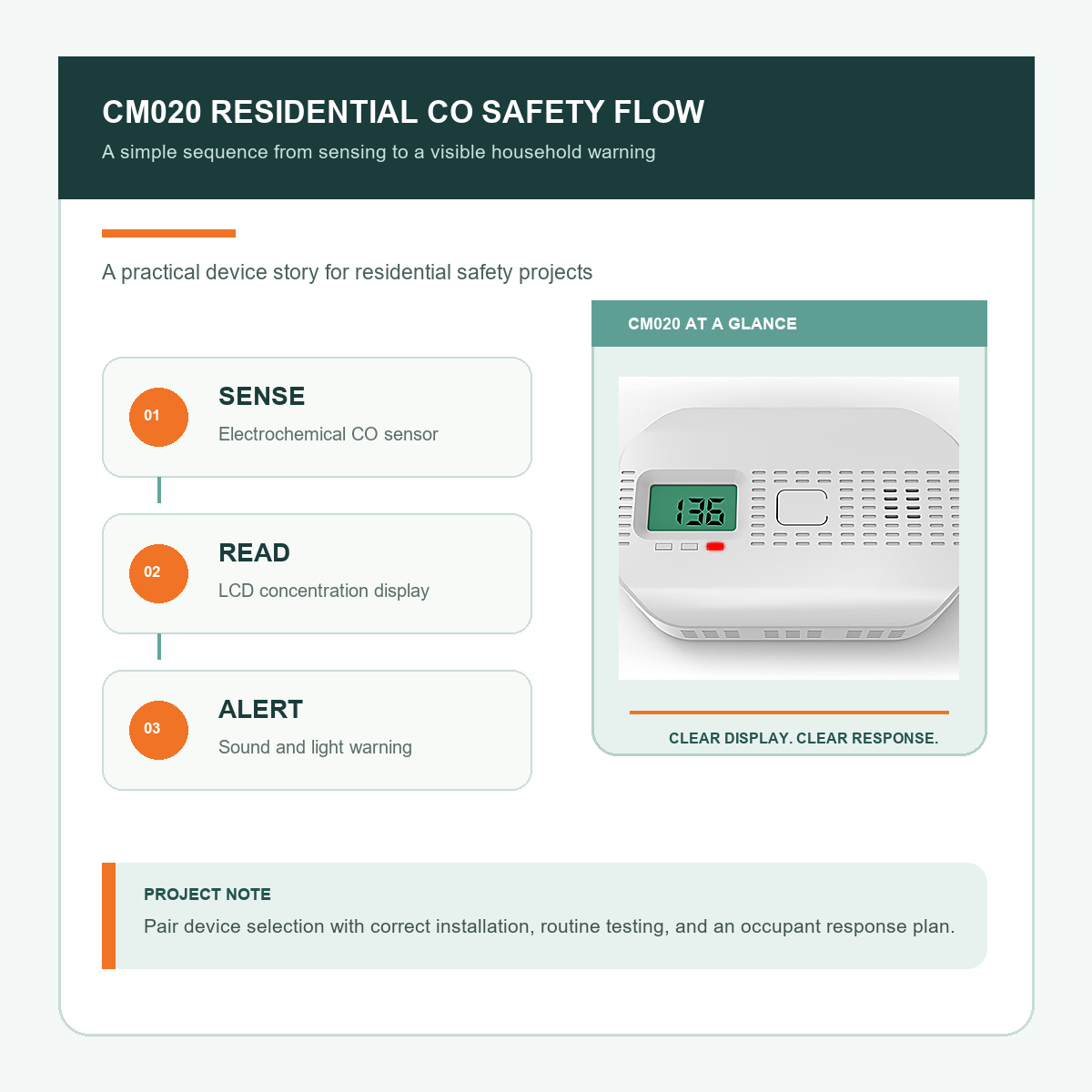
A readable device display helps turn carbon monoxide monitoring into a more visible routine. Alongside product selection, project teams should define the installation locations, explain the warning process to occupants, schedule routine testing, and assign responsibility for follow-up.
A Company News Update for Channel Partners
For distributors and installation partners, CM020 can be presented as a dedicated residential CO-monitoring option with electrochemical sensing, LCD concentration display, and audible and visual alerting. The product supports a clear household gas alarm offering without adding unverified feature claims to catalog material.
- Confirm the residential installation locations.
- Check destination-market requirements and documentation needs.
- Explain sound and light alarm response to occupants.
- Define routine testing and follow-up responsibility.
- Confirm packaging, labeling, quantity, and delivery schedule.
Supporting Safer Everyday Decisions
The CDC explains carbon monoxide safety in the context of fuel-burning equipment and other sources. That message reinforces why device selection, correct installation, routine testing, and a response plan all belong to the same conversation.
Frequently Asked Questions
What gas does CM020 monitor?
CM020 is listed by PESV for carbon monoxide monitoring.
How does CM020 alert users?
The PESV product page states that CM020 provides sound and light alarm indication when carbon monoxide concentration exceeds the preset value.
What should buyers confirm before ordering?
Confirm the intended residential application, destination-market requirements, installation plan, packaging needs, quantity, and delivery schedule. PESV can then help align CM020 with the project requirement.
Explore CM020 with PESV
Review the CM020 product page, compare the battery operated CO alarm range, browse household gas alarm options, see home safety applications, or contact PESV for product and project support.