
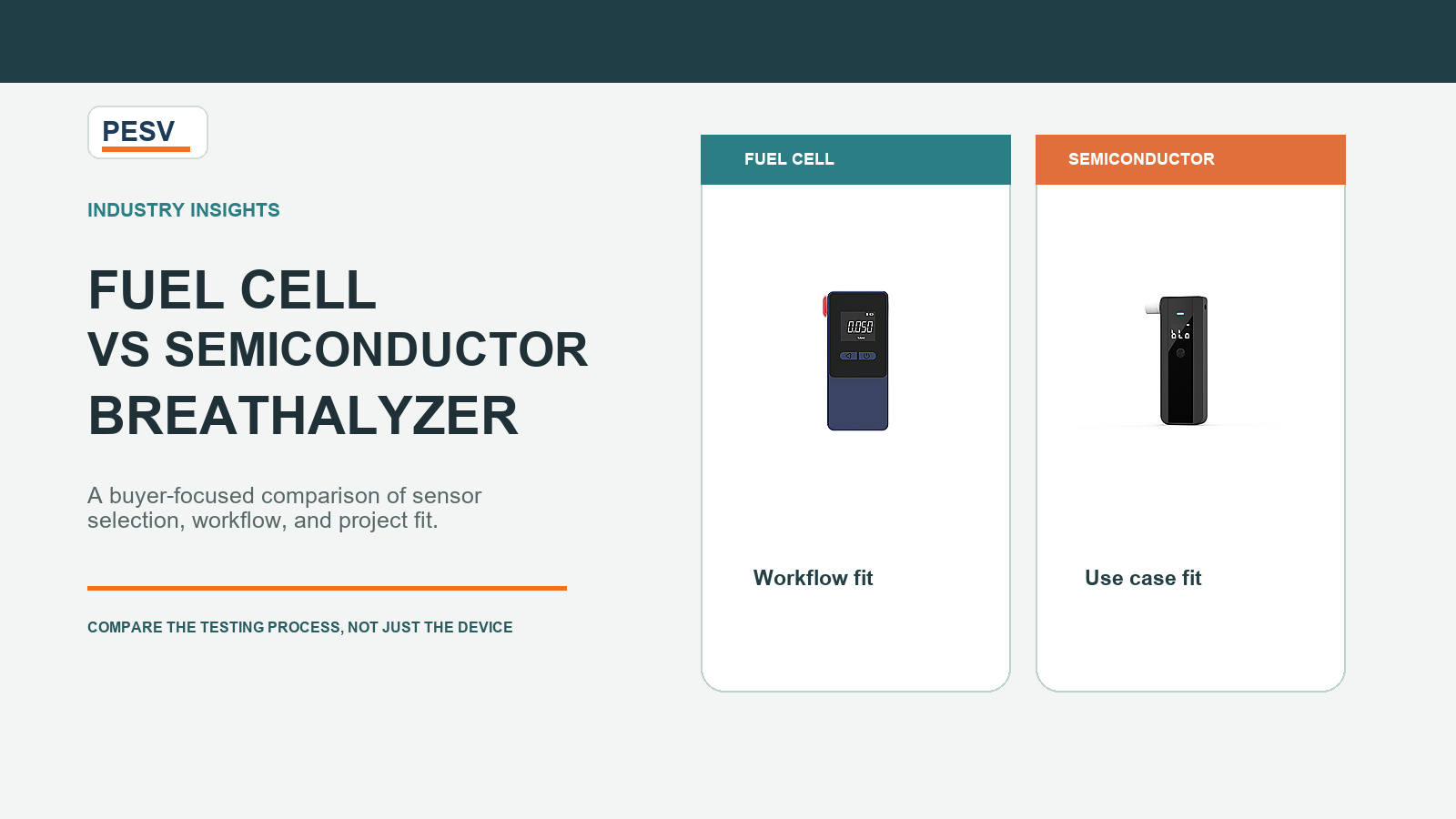
Fuel cell breathalyzer vs semiconductor breathalyzer is a practical comparison for distributors, workplace buyers, and organizations planning an alcohol-testing program. The useful choice is not based on a label alone. It depends on the intended testing setting, frequency of use, operator workflow, result handling, service plan, and the type of buyer support required.
Start With the Intended Testing Scenario
Before comparing sensor types, define the program. A personal check, a workplace screening routine, a distributor product range, and a professional testing workflow can have different requirements. Buyers should document who operates the device, how results are reviewed, what follow-up occurs, and what local procedures apply.
How Sensor Type Fits Into a Buyer Conversation
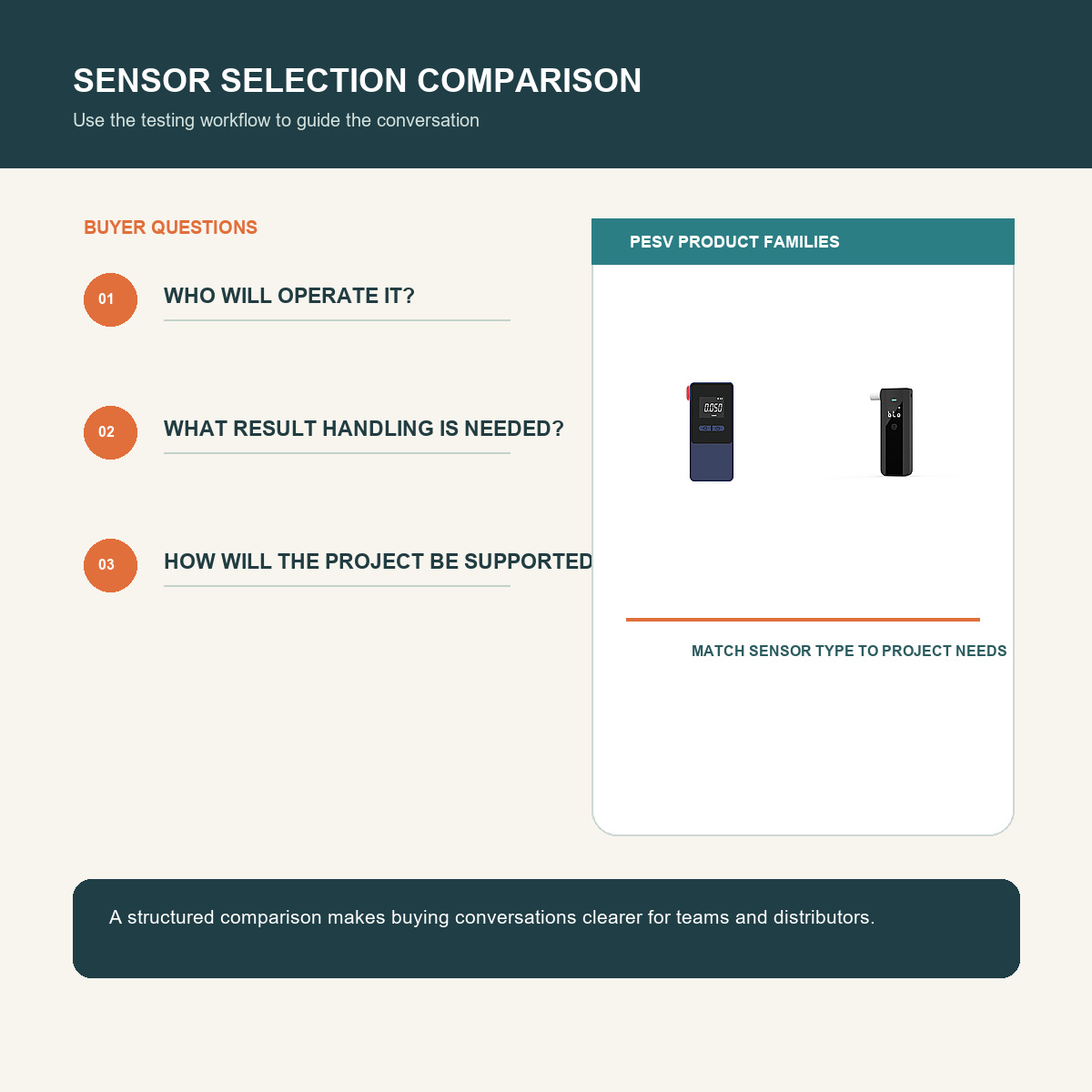
Fuel cell breathalyzer and semiconductor breathalyzer models belong to different product families, but selection should remain project-led. Review the product category, published model information, workflow needs, budget expectations, accessories, calibration arrangements, and documentation needs together. A supplier can then help align the sensor family and model to the actual application.
For example, the AT808 fuel cell breathalyzer is already part of the PESV alcohol-testing range. It can be considered alongside other products only after the team has defined the intended use and required support.
Compare Workflow, Result Handling, and Support
A structured comparison should ask how testing is initiated, how results are presented, whether records or printing are needed, who maintains the product, and how operators will be trained. These points are often more important to a project than a single technical term because they affect daily adoption and follow-up.
Avoid Selecting Only by Price or One Specification
A lower initial price can be less useful if a device does not fit the required workflow, accessories, support process, or destination-market documentation. The clearer approach is to shortlist suitable categories, compare published information, and confirm the final model configuration with the supplier before ordering.
Questions Buyers Should Bring to a Comparison
- What testing setting and operator workflow are planned?
- How will results be viewed, reviewed, or followed up?
- What accessories, consumables, and service support are required?
- What product documentation and destination-market requirements apply?
- Which PESV model best matches the completed project brief?
Explore the PESV Alcohol Tester Range
Browse the PESV Alcohol Tester range, explore breathalyzer applications, read the professional breathalyzer buyer guide, or contact PESV for product selection support. For wider alcohol-safety context, see the WHO alcohol fact sheet.