
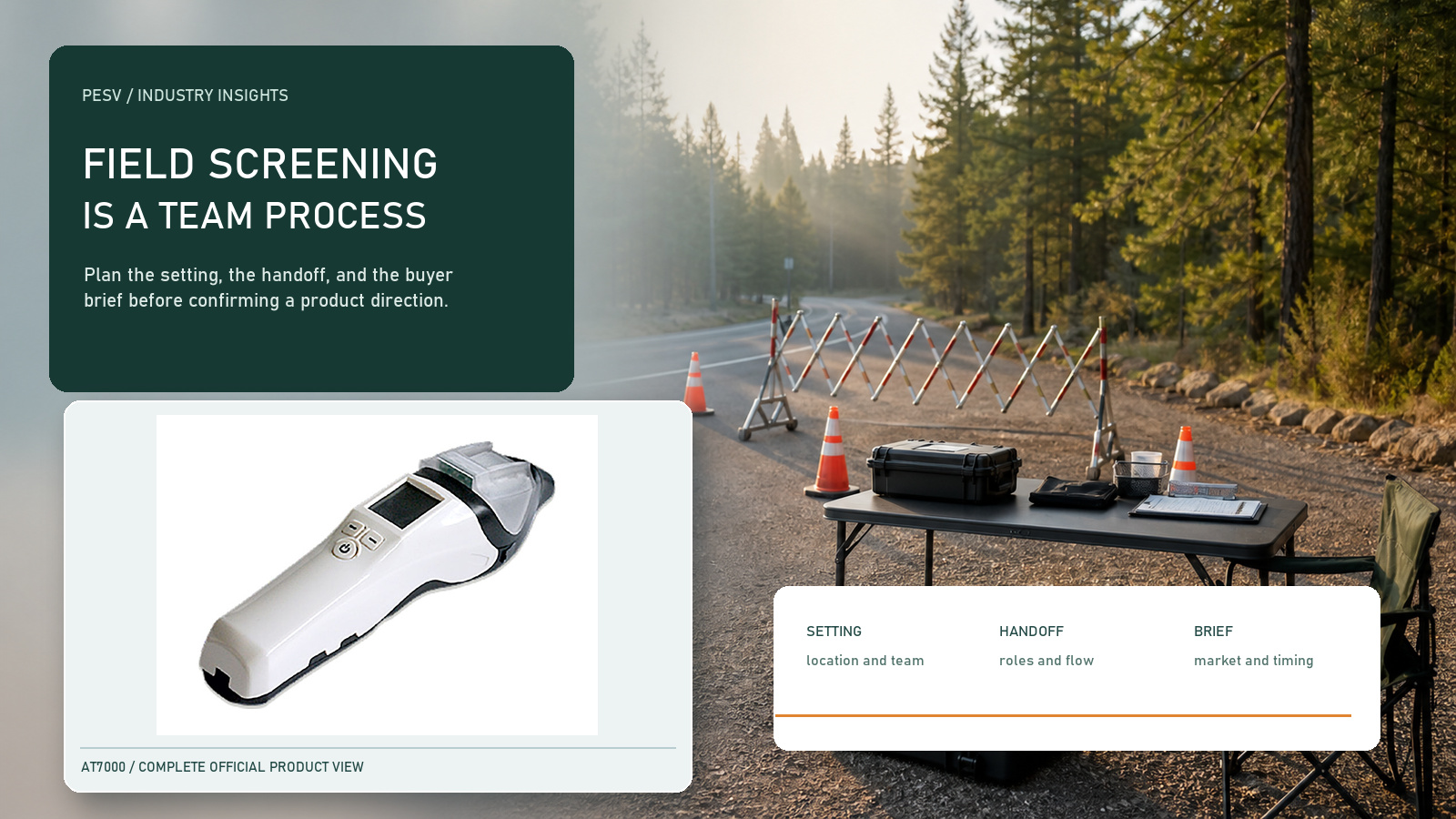
An AT7000 screening workflow for field teams should be planned as a sequence of real operating decisions: where screening is expected to take place, who receives and operates the equipment, how a team hands work over, and what product, market, and delivery information must be confirmed before a project begins.
The AT7000 fuel cell rapid screening breathalyzer introduction is the relevant PESV product reference. For field projects, the model is only one element of a wider plan that includes the organization’s own process, buyer requirements, and local considerations.
AT7000 Screening Workflow for Field Teams: Define the Operating Scene
A useful field brief starts with the scene rather than the specification. Is the team working at a temporary checkpoint, a transport-related site, a workplace entrance, or another controlled location? How many operators may be involved? What does the handoff between people look like? Answers to these questions shape the practical conversation before a buyer asks for a final product direction.
The workflow record can remain simple: intended setting, responsible team, approximate operating rhythm, destination market, quantity, requested documents, timeline, and any support needs. It should be clear enough that the buyer, supplier, and internal stakeholders are discussing the same project.
Build the Brief Around Handoff, Not Assumptions
Field teams often need a concise handoff: who prepares the equipment, who operates it, who records the project information, and who manages follow-up questions. This is not a claim about a device’s performance or a substitute for an organization’s policy. It is a way to organize the buyer’s requirements before procurement.
For a related application frame, review the PESV article on an AT7000 rapid screening breathalyzer for traffic safety. The PESV Breathalyzer Applications page gives a broader view of alcohol-testing scenarios without defining a final operational procedure for any individual organization.
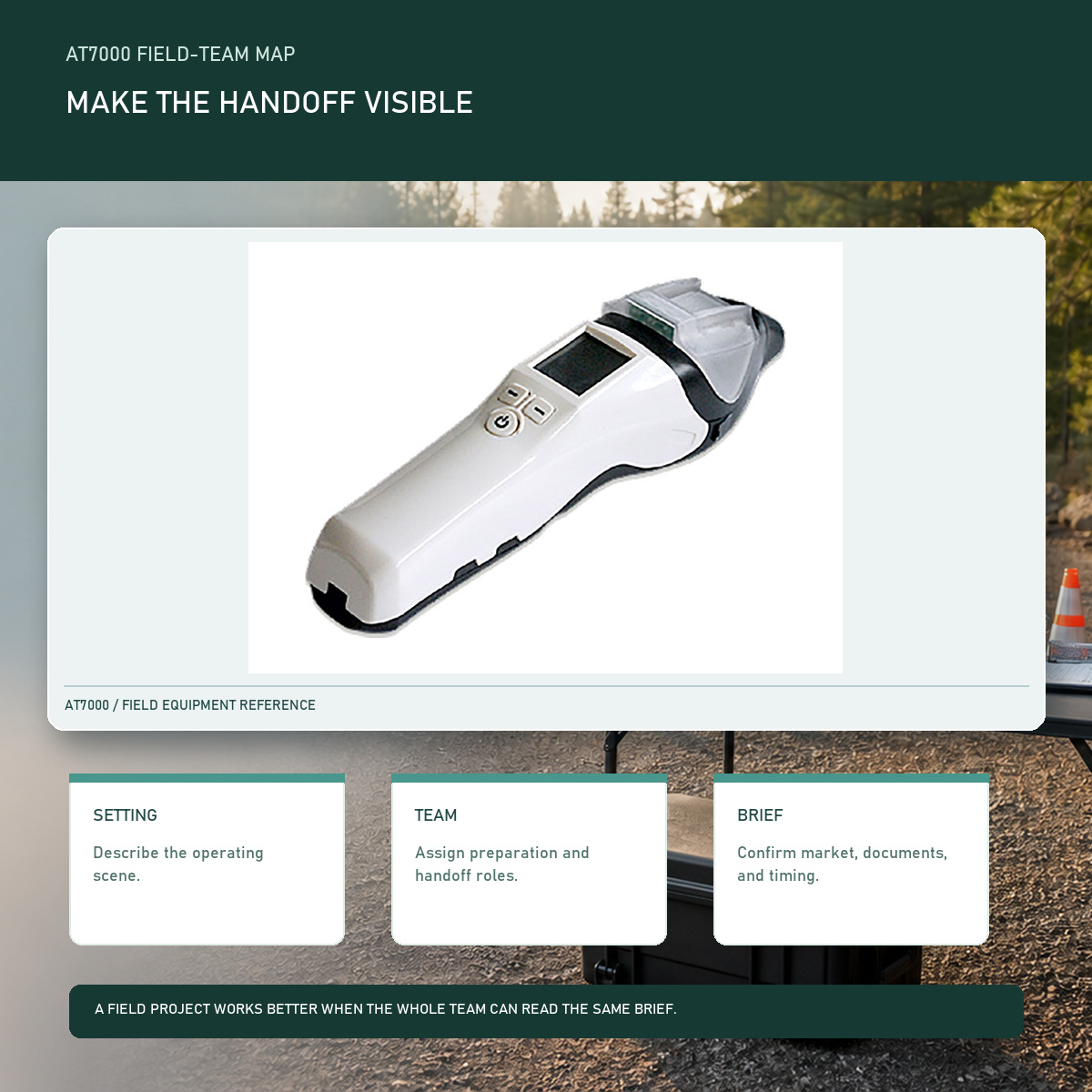
Questions That Keep a Field Project Moving
- Setting: Where will the team operate, and what local conditions should the buyer describe?
- People: Which team members are responsible for preparation, operation, handoff, and supplier communication?
- Project brief: Which market, quantity, documentation, packaging, and timing requirements must be confirmed?
- Follow-up: How will outstanding product or commercial questions be collected and resolved?
This project-first method avoids treating an equipment enquiry as a one-line request. It gives everyone a more durable record of what is being planned and what still needs confirmation.
Responsible Context for Alcohol-Screening Discussions
Alcohol screening is connected to broader safety and health concerns. The World Health Organization alcohol fact sheet provides general context. Buyers should apply their organization’s own procedures and confirm local requirements for their particular setting.
Plan an AT7000 Field-Team Enquiry with PESV
Review the PESV Alcohol Tester range, visit the AT7000 reference, then contact PESV with the planned setting, team workflow, market, quantity, document request, and timeline.
Frequently Asked Questions
What should a field-team brief include?
It should include the intended setting, responsible team, workflow questions, destination market, quantity, requested documents, and delivery timing.
Does this guide create a final field procedure?
No. Each organization needs to define and approve its own operating procedure for the actual application.
Which PESV pages help with an AT7000 discussion?
Use the AT7000 product introduction, the related traffic-safety article, the Breathalyzer Applications page, and the PESV Alcohol Tester range.