
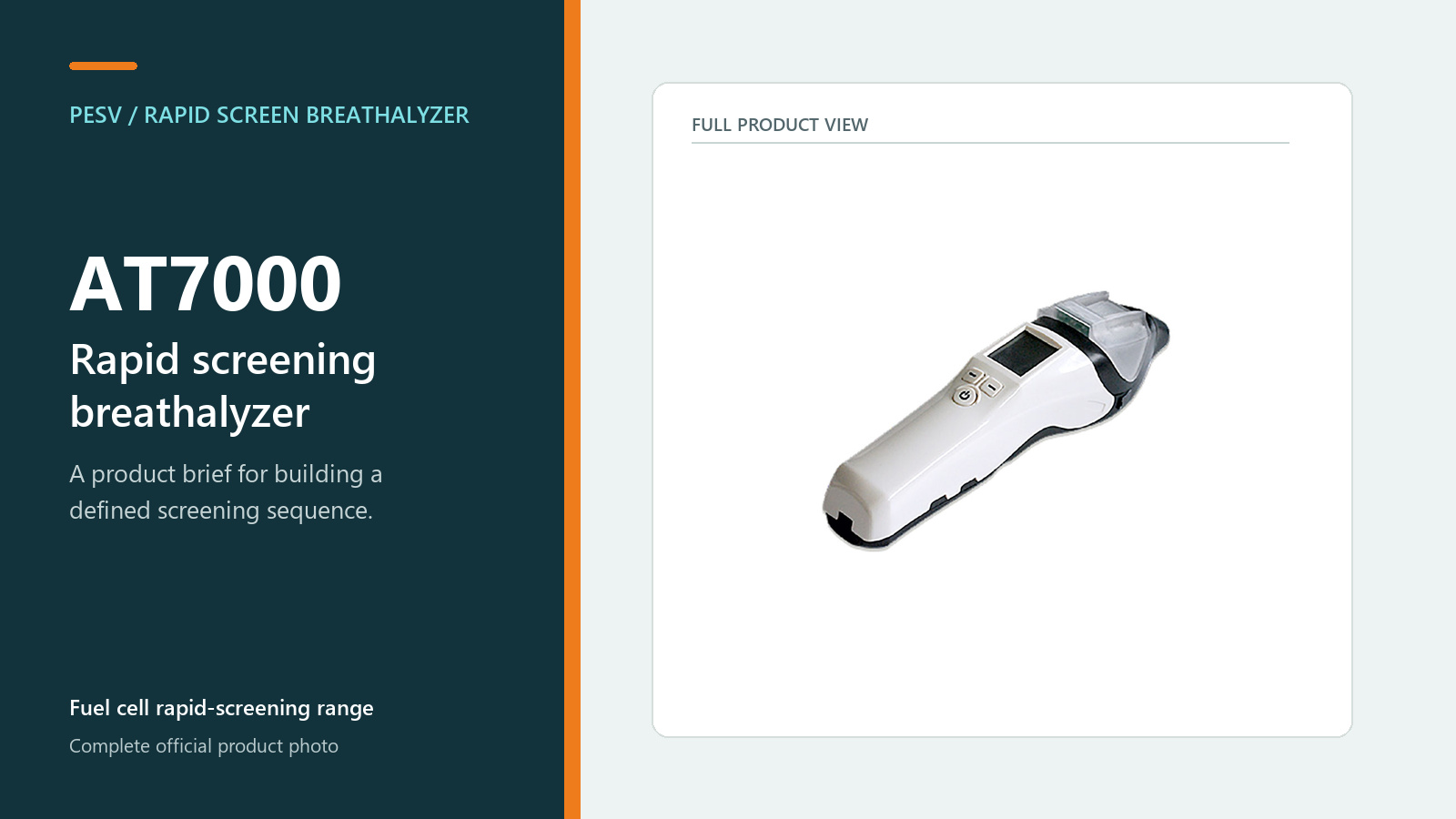
A rapid screening breathalyzer earns its place when the organisation has already defined what happens before and after a screen. The device is only one part of a process: someone prepares the screening point, an operator follows a consistent sequence, and a result is handled according to the applicable site policy and local rules. The AT7000 gives buyers a specific product to review when that first step needs to be planned carefully.
Start with the screening job, not a vague equipment request
A request for a breathalyzer can mean very different things. A logistics site may be considering a controlled entry process. A venue operator may be reviewing how staff manage an event-day safety procedure. A distributor may be clarifying the product category a customer actually needs. Those situations should not automatically produce the same equipment brief.
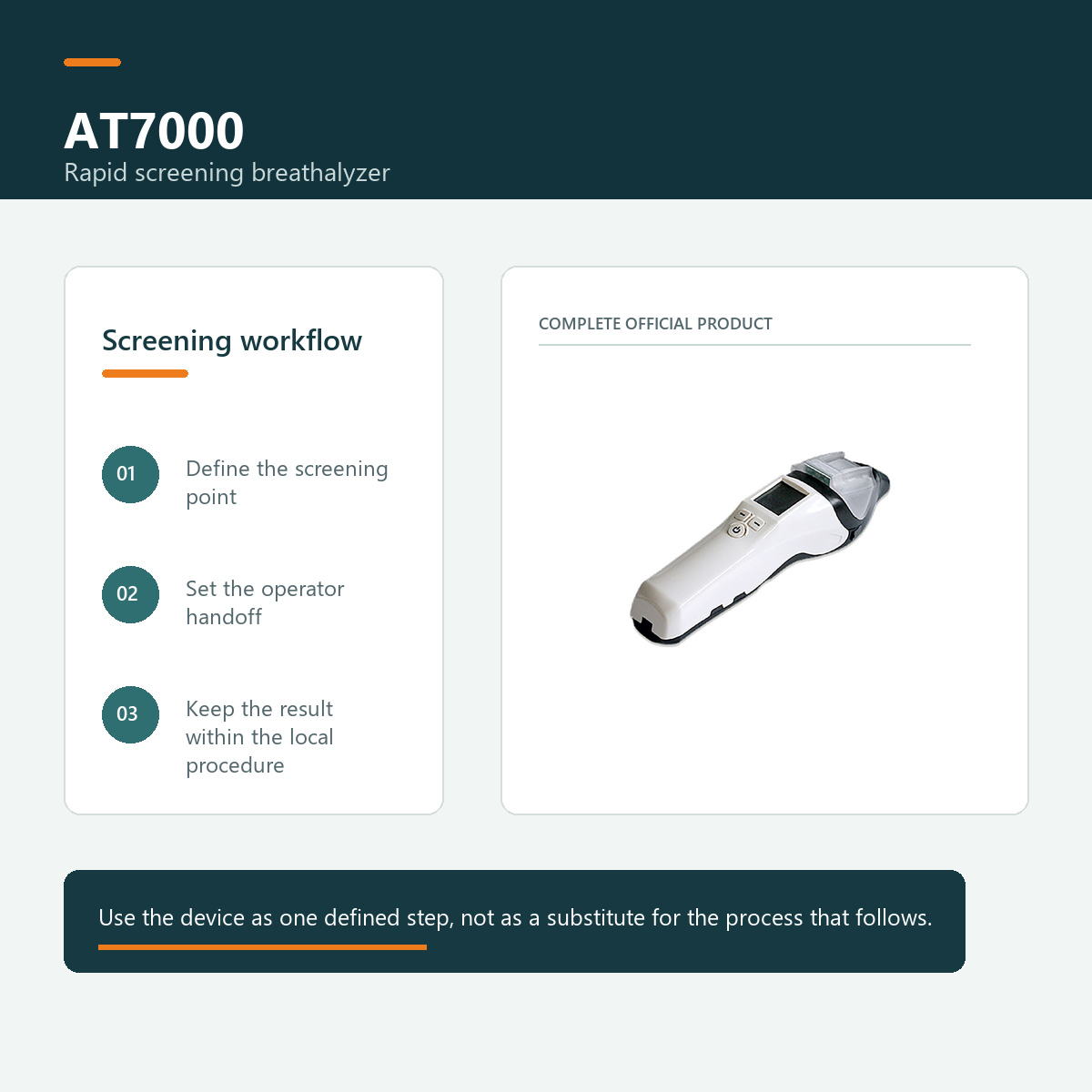
Before choosing a rapid screening breathalyzer, write down the intended location, who will operate it, the expected sequence, and the agreed handoff when a result needs follow-up. This keeps the enquiry anchored to a real operational question instead of a loose request for a device.
Where the AT7000 belongs in that discussion
PESV lists the AT7000 in its rapid screen breathalyzer range as a fuel-cell model. That identifies the product category, but it does not turn a product page into a complete operating procedure. Buyers should confirm the model documentation, the intended use case, any local requirements, and the service plan before treating a specification as final.
The useful question is not whether the AT7000 can be described with an impressive list of generic benefits. It is whether the published model information fits the screening point that the organisation has actually designed. A clear boundary is valuable here: screening equipment can support a defined first step, while a company policy, a trained operator, and the relevant local process determine what follows.
Make the handoff visible before procurement
A compact review can prevent a vague purchase decision. The team responsible for the project should settle four points:
- Screening point: where the check occurs and what conditions the operator will face.
- Operator handoff: who receives the result and who owns the next action.
- Record boundary: what the local procedure requires the organisation to document, if anything.
- Product support: which operating, maintenance, and calibration information must be confirmed for the exact model.
For broader public-health context, the World Health Organization’s alcohol overview explains why alcohol-related harm needs a structured response. It does not replace local law, a workplace policy, or the AT7000 documentation.
A better enquiry for the AT7000
An effective product enquiry describes the screening environment, the workflow owner, the expected throughput, and the unanswered technical questions. That gives PESV a basis for discussing the AT7000 in relation to the actual job rather than making assumptions about a programme that has not been defined.
When your screening process is ready to be scoped, use the PESV contact route to share the intended application and the information your team still needs to confirm.
Keep claims inside their evidence
The AT7000 product category should not be used to imply a legal-evidential result, a universal screening threshold, or a particular calibration interval unless the current model documentation and the applicable procedure support that conclusion. Keeping those questions open is not a weakness in the article; it is what makes a product review usable for a real operator.