
News Brief
The alcohol tester market is gaining new attention as road-safety authorities, courts, and vehicle regulators continue to focus on impaired-driving prevention.
Recent news around crash-scene breath testing and ignition interlock rules shows that alcohol screening is becoming more structured. At the same time, vehicle-based and wearable impairment detection technologies are developing, but they are not yet a full replacement for direct breath alcohol testing.
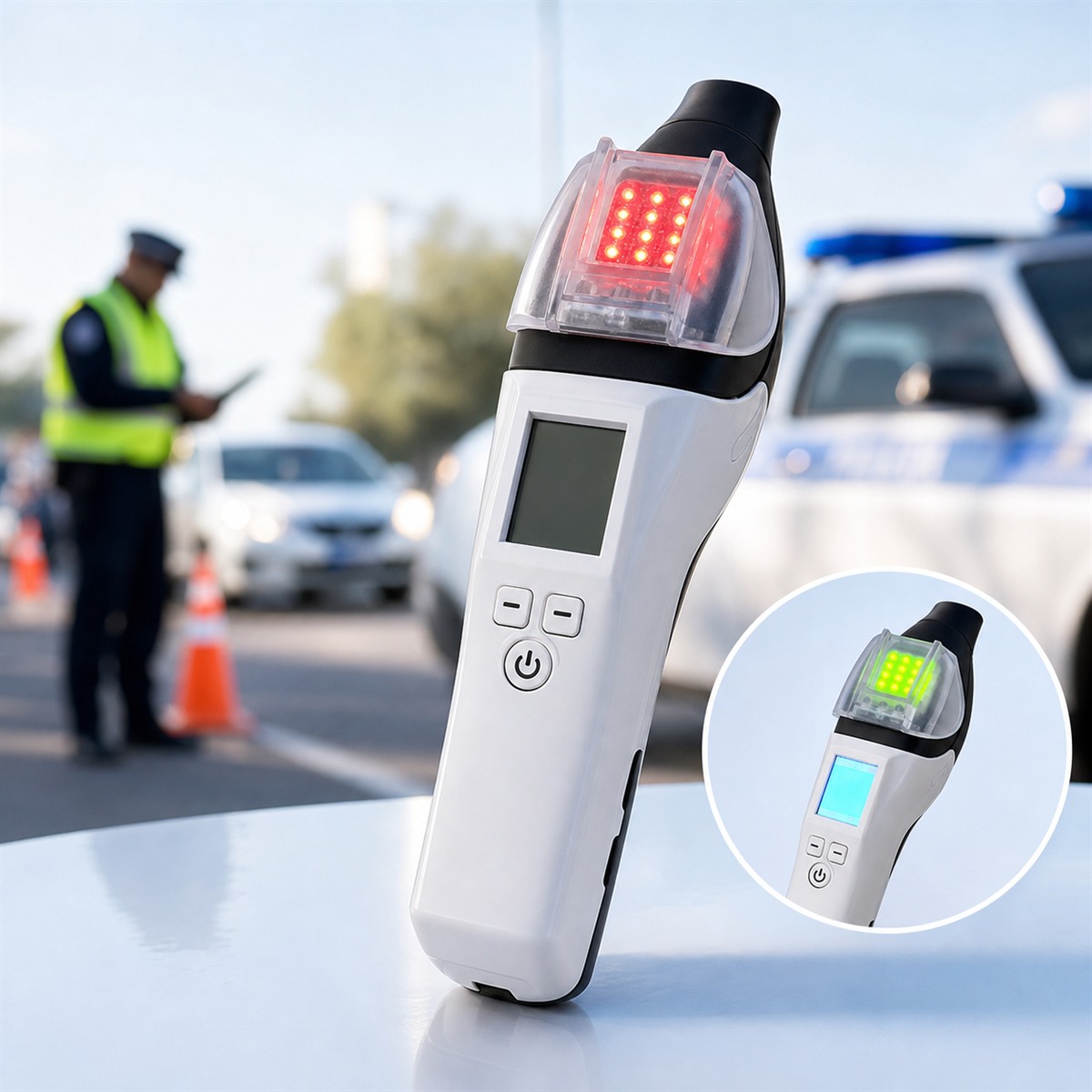
This creates a practical opportunity for rapid screening products such as AT7000 Fuel Cell Rapid Screening Breathalyzer.
What Happened Recently
Recent coverage from Colorado highlighted stronger attention on breath testing after serious crashes. Reports around Magnus’ Law discussed the role of preliminary breath screening in crash investigations involving serious injury or death.
Another recent DUI policy discussion focused on ignition interlock devices. These systems require a driver to pass a breath-based alcohol test before starting a vehicle.
Together, these stories point to a wider industry shift: alcohol testing is moving from simple spot checks toward more consistent screening workflows.
At the same time, regulators and researchers are exploring advanced impaired-driving detection. This includes vehicle sensors, driver-monitoring systems, and smartwatch-based detection research.
However, reports also show that passive impaired-driving detection still faces real-world challenges, including accuracy, reliability, privacy, and legal acceptance.
Why It Matters for Alcohol Tester Buyers
For buyers, the message is practical.
Organizations still need direct, fast, and easy-to-deploy alcohol screening tools. This includes law enforcement teams, transport operators, workplace safety managers, event security providers, and fleet supervisors.
A professional alcohol tester is useful when a quick first-stage screening result is needed before further action.
This is why buyer search demand is expanding beyond the general word “breathalyzer.” More specific search terms are becoming important, including:
- rapid screening breathalyzer
- breath alcohol tester
- fuel cell breathalyzer
- roadside alcohol screening
- DUI breathalyzer
- alcohol testing equipment
For Google SEO, these terms help connect product content with current market demand.
Product Watch: AT7000
AT7000 Fuel Cell Rapid Screening Breathalyzer fits this trend because it is positioned for rapid alcohol screening applications.
Based on the real product images, AT7000 has a white handheld body, front display area, physical control buttons, black top mouthpiece area, and a translucent top module with red and green LED-style screening indicators.
These visible product characteristics support content positioning around quick screening, field alcohol checks, and breath alcohol testing.
To keep the article accurate, this content does not claim unverified specifications such as accuracy, memory capacity, certification, Bluetooth, printer function, wireless connection, or data storage.
AT7000 should be introduced as a rapid screening breathalyzer for alcohol testing scenarios, without exaggerating product features that are not confirmed in official materials.
Market Signals to Watch
1. Crash-Scene Screening Is Becoming More Important
Recent policy discussions show that breath testing after serious crashes is receiving more attention.
This supports demand for fast alcohol screening tools that can be used in field environments.
2. Ignition Interlock Rules Are Expanding
Ignition interlock devices show how breath-based alcohol testing is becoming part of DUI control systems.
This does not replace handheld alcohol testers, but it reinforces the importance of breath alcohol testing technology.
3. Passive Detection Is Still Not Fully Ready
Vehicle-based impairment detection is a hot topic, but current reporting suggests the technology still needs improvement before broad mandatory use.
That leaves room for practical breath alcohol testers in real-world screening.
4. Wearable Detection Is Emerging
Smartwatch-based alcohol impairment research shows an interesting future direction.
However, this type of detection is still a developing technology trend, not a replacement for direct breath testing.
5. Buyers Want Faster Screening Workflows
Procurement language is becoming more specific. Buyers are searching for products that support fast screening, clear operation, and practical field use.
This makes AT7000 relevant for search terms such as rapid screening breathalyzer and roadside alcohol screening.
6. SEO Content Needs More Trust
Google-friendly product news should not rely on exaggerated claims.
Better content combines industry news, real product images, careful product wording, and credible external links.
7. Alcohol Testing Remains a Safety Priority
Whether in traffic enforcement, workplace safety, transport operations, or event security, alcohol testing remains connected to risk prevention.
This keeps alcohol tester products relevant despite the growth of new impairment-detection technologies.
Reference Links
For additional context, see these external sources:
- Axios reported on Colorado’s crash breath-test law.
- The Sun covered Colorado DUI ignition interlock law changes.
- Cycling Weekly reported on Magnus’ Law and preliminary breath screening.
- Road & Track discussed NHTSA’s impaired-driving detection update.
- arXiv published research on smartwatch-based drunk-driving detection.
Internal Resources for Buyers
Related PESV pages: