
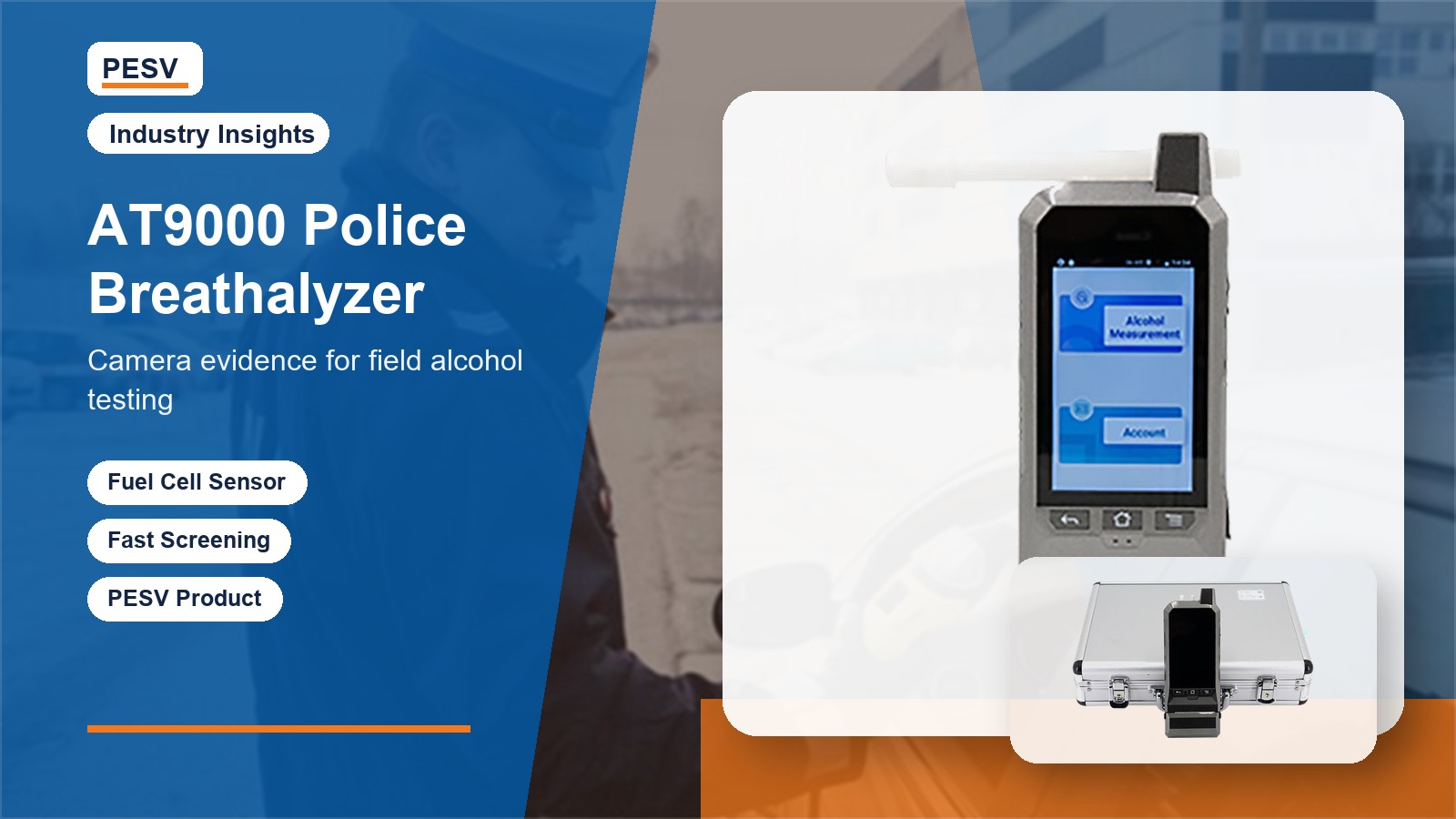
The AT9000 police breathalyzer with camera is built for professional alcohol testing situations where a simple numeric result may not be enough. In roadside checks, enforcement programs, workplace safety management, and distributor-led government projects, buyers increasingly look for breath alcohol testers that can support testing, record keeping, and evidence capture in one workflow.
PESV is positioning the AT9000 as a professional breathalyzer option for these evidence-based testing needs. The product page lists a fuel cell sensor, a changeable pre-calibrated sensor module, touch screen operation, built-in printing, data uploading, Android operation system, dual cameras, GPS positioning, and large testing record storage.
Industry demand is moving from single-result testing toward clearer field records, easier data handling, and stronger operational traceability.
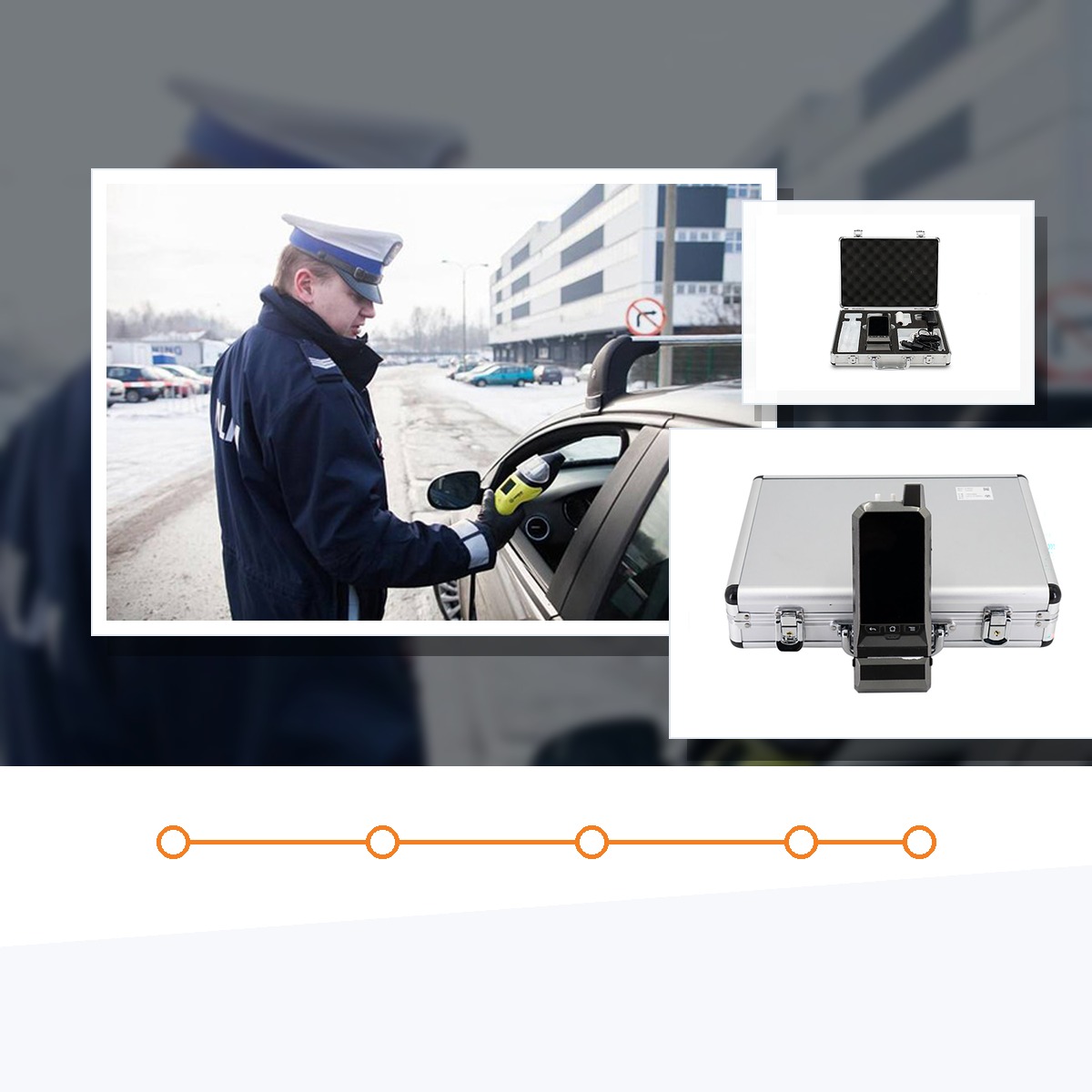
Why Evidence-Based Alcohol Testing Is Becoming More Important
Alcohol-impaired driving remains a major road safety topic around the world. Public agencies such as the U.S. National Highway Traffic Safety Administration continue to publish drunk-driving safety resources and explain how BAC is measured by a breathalyzer or blood test. For enforcement teams and safety managers, the practical challenge is not only taking a reading; it is also managing the information that supports the testing decision.
A professional breathalyzer with camera can help organizations build a more complete testing workflow. When device operation, test result, time, location, and visual record are managed together, teams can reduce manual paperwork and improve consistency in field work. This is why products such as the AT9000 are relevant for modern alcohol testing programs.
What PESV Highlights on the AT9000 Product Page
According to the current PESV product page, the AT9000 is an advanced portable breath alcohol tester using a changeable fuel cell sensor module. PESV describes the sensor module as pre-calibrated and easy for maintenance, which is useful for professional users who need a practical service process rather than a one-time consumer device.
The AT9000 also supports passive and active testing, adjustable alarm thresholds, switchable result units, temperature and time indication, and a 4.0-inch touch screen. For field use, the listed features include a built-in printer, data uploading, Android operation system, photograph, video and sound recording, GPS positioning, and communication options including 2G/3G/4G, WiFi, and Bluetooth.
A More Complete Workflow for Roadside and Workplace Checks
In a roadside alcohol testing scenario, teams often need a fast and clear process. The AT9000 can support the sequence from breath sample collection to result display, printed output, record storage, and follow-up data handling. The product page also lists testing records up to 100,000, which supports teams that need to review historical testing information.
In workplace safety management, the same device concept can support scheduled checks, entry-point testing, or incident-related screening where a professional breath alcohol tester is required. The built-in printer and data upload functions are especially relevant when safety teams need clear records for internal procedures.
Why the Camera Feature Matters for Professional Use
The camera function is a key reason buyers search for a police breathalyzer with camera rather than a basic handheld tester. PESV lists dual cameras on the AT9000, including an 8 megapixel rear camera and a 5 megapixel side camera. Together with photograph, video, and sound recording functions, this can help professional users document field testing context where visual records are part of their operating process.
This does not replace local legal procedure or internal compliance rules. Instead, it gives buyers a device direction to discuss when they need alcohol testing equipment that supports both measurement and traceability.
What Buyers Should Confirm Before Choosing AT9000
Before procurement, buyers should confirm the target application, required result unit, local testing process, calibration expectations, data management requirements, and whether camera or GPS records are permitted or required in their operating environment.
- Confirm whether the project requires active testing, passive screening, or both.
- Review the required result units and alarm threshold settings for the target market.
- Check how printed records and uploaded data will be stored and managed.
- Confirm whether camera, GPS, and communication functions match local procedures.
- Discuss sensor module maintenance, calibration planning, and spare parts support with PESV before purchase.
PESV Support for Distributors and Professional Buyers
The AT9000 belongs to the PESV Alcohol Tester product category and is listed under Professional Breathalyzer. It can be reviewed directly on the AT9000 Police Breathalyzer with Camera product page.
Distributors, law enforcement procurement teams, workplace safety managers, and project buyers can also explore PESV Breathalyzer applications for related use cases such as Police and Workplace. For model selection, pricing, or cooperation discussions, contact PESV with the intended market, testing workflow, and required documentation needs.
Buyer Questions About the AT9000 Police Breathalyzer with Camera
What makes the AT9000 different from a basic breath alcohol tester?
The AT9000 combines fuel cell breath alcohol testing with a touch screen interface, built-in printing, data upload, dual cameras, GPS positioning, and large test record storage, according to the PESV product page.
Who is the AT9000 police breathalyzer with camera designed for?
It is positioned for professional alcohol testing scenarios such as law enforcement, roadside checks, workplace safety management, and distributor customers who need a professional breathalyzer solution.
Should buyers confirm local testing rules before purchase?
Yes. Alcohol testing procedures, result units, calibration expectations, and evidence requirements can vary by country or organization, so buyers should confirm local requirements before final procurement.