
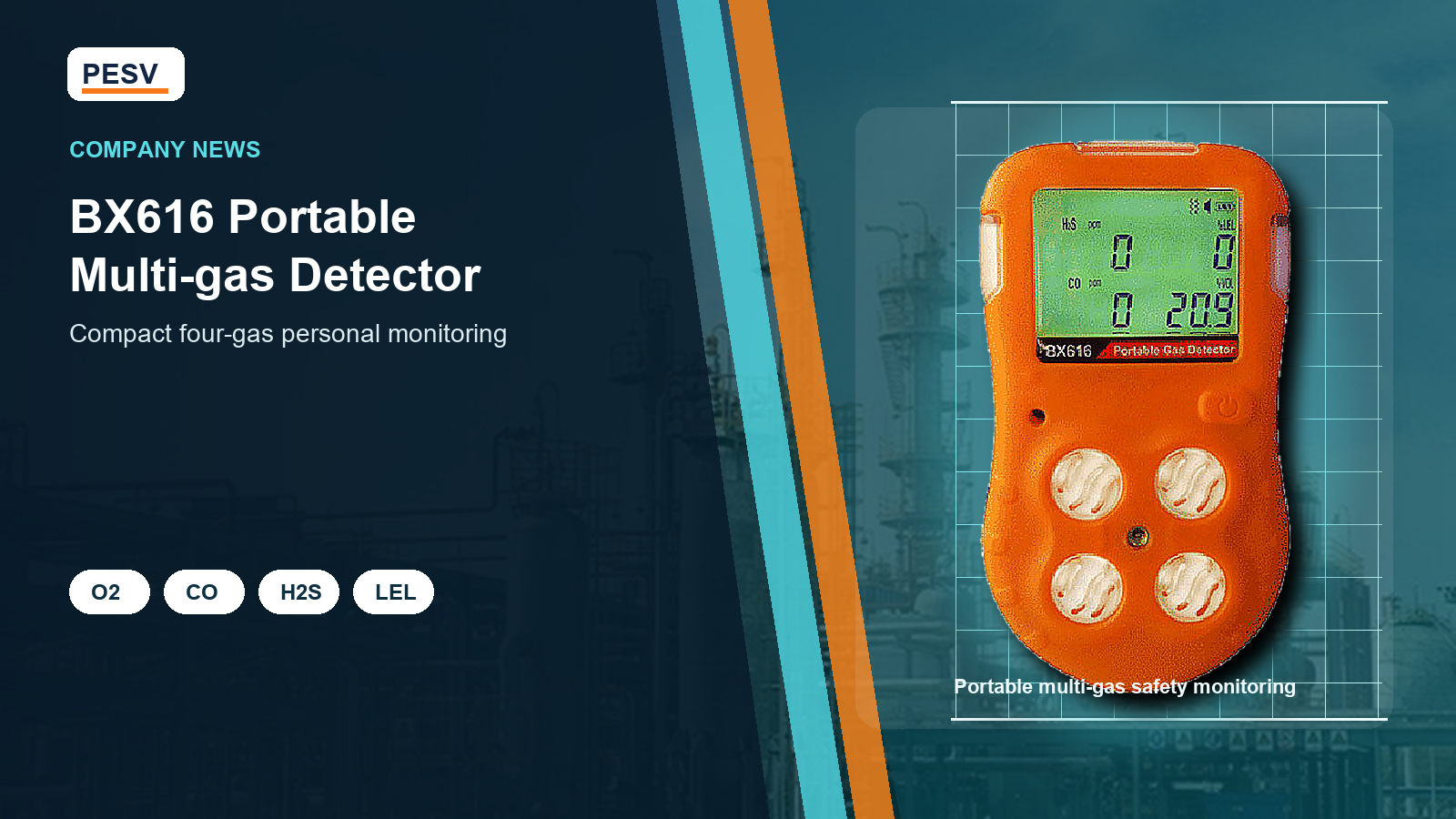
PESV is introducing the BX616 Portable Multi-gas Detector for teams that need compact, continuous four-gas awareness during industrial work. BX616 monitors oxygen, carbon monoxide, hydrogen sulfide, and combustible gas, combining four common atmospheric checks in a lightweight personal instrument.
The product is positioned for routine industrial safety work where the site procedure calls for direct-reading personal gas monitoring. A detector supports the decision process, but it should always be used with the site risk assessment, entry requirements, calibration plan, and emergency response procedure.
Four Critical Gas Measurements in One Compact Detector
The official BX616 product information lists O2 from 0 to 25%VOL, CO from 0 to 500ppm, H2S from 0 to 100ppm, and combustible gas from 0 to 100%LEL. This combination can help teams address oxygen deficiency, toxic-gas exposure, and flammable-atmosphere risk using a single configured device.
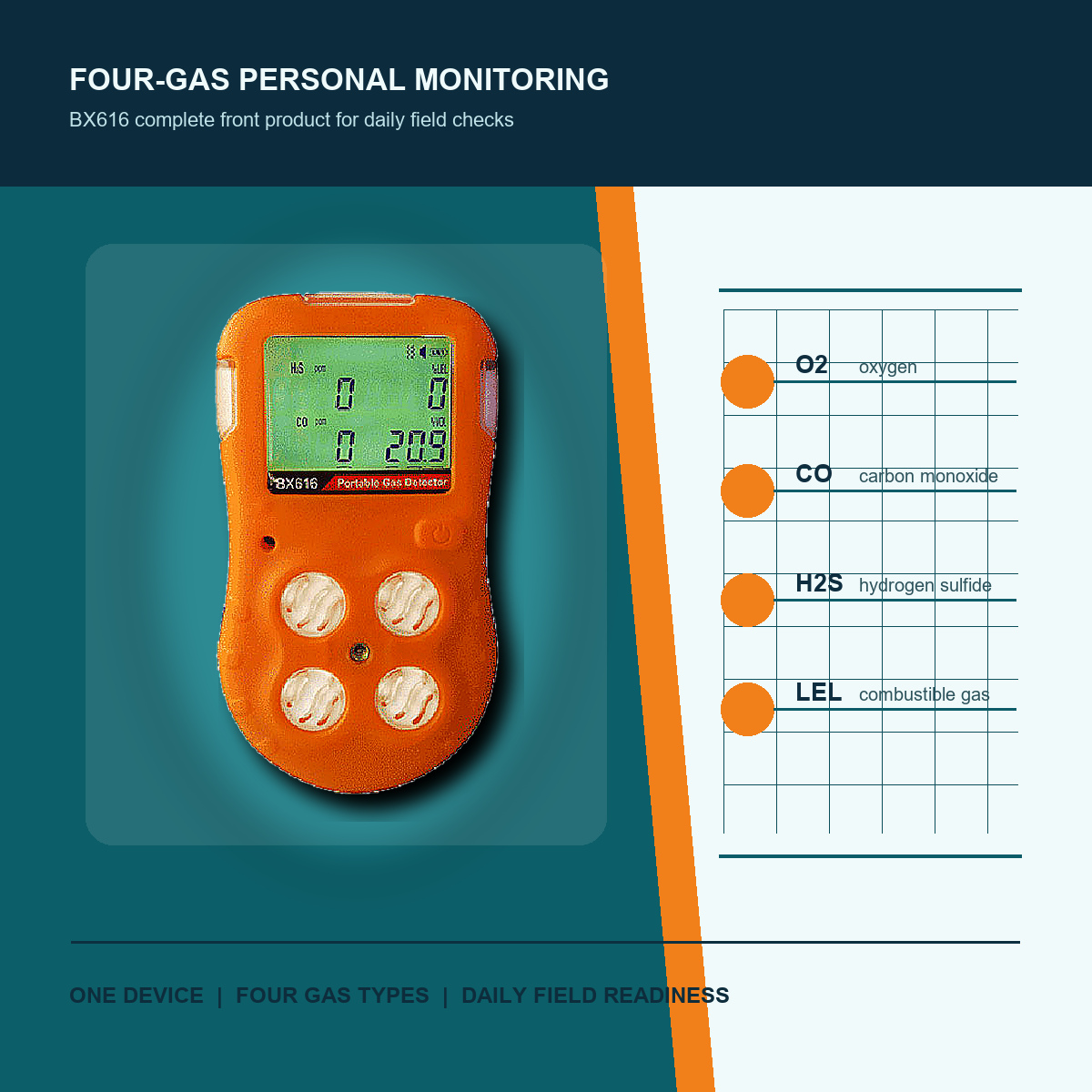
BX616 Product Highlights
- Small size and approximately 220g weight
- Simple one-button operation
- Visual, audible, and vibration alarm
- Adjustable alarm levels and span calibration values
- STEL and TWA alarm for toxic gases
- Self-test, self-diagnostic, confidence beep, and low-battery alert
- IP66 protection
Designed for Daily Field Readiness
PESV lists natural diffusion measurement, LCD display, audible alarm at or above 85dB at one meter, a DC3.7V 1800mAh lithium battery, and operating time of at least eight hours per charge. The published 120 x 68 x 30 mm dimensions are useful where a compact detector is preferred for daily worker carry.
For confined spaces and other controlled locations, OSHA provides confined-space guidance that includes atmospheric hazards and direct-reading portable gas-monitor information. Apply the local regulation and the employer’s approved procedure to the specific work location.
A Practical Selection Checklist
- Confirm that O2, CO, H2S, and combustible gas cover the identified site hazards.
- Review required ranges, alarm thresholds, bump testing, and calibration procedure.
- Confirm battery charging, operating duration, accessories, and maintenance responsibilities.
- Check the work environment against the published IP66, temperature, and humidity specifications.
- Document how readings and alarms support the approved work and response procedure.
Related PESV Resources
Browse portable multi-gas detectors, explore industrial gas detectors, or review industrial safety applications. Contact PESV with your gas, range, and application requirements for configuration support.