
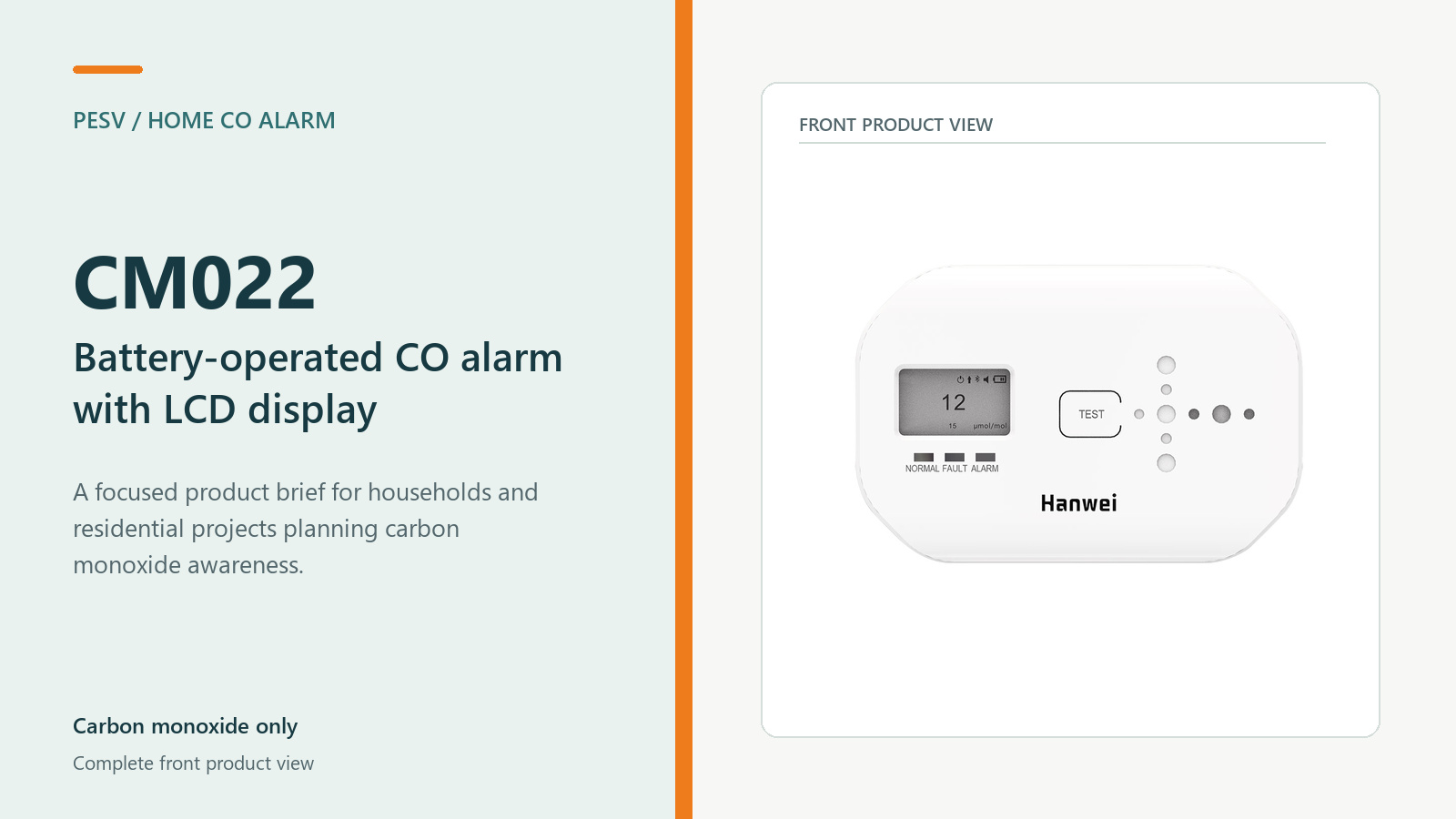
A battery operated CO alarm should begin with a precise household question: is the concern carbon monoxide, and does the family have a clear response plan if an alarm occurs? The CM022 is a carbon monoxide alarm product, so its value is in helping homeowners and residential project teams discuss that specific hazard without treating every home-safety device as interchangeable.
Keep carbon monoxide separate from a fuel-gas leak question
Carbon monoxide and an unburned natural-gas or LPG leak are not the same hazard. A CO alarm should not be presented as a substitute for a combustible-gas detector unless the exact product documentation says it has that separate function. Making this distinction before installation helps a household choose the alarm category that matches the concern.
The CDC’s carbon monoxide guidance describes CO as an odorless, colorless gas and links detector use to a broader prevention plan. That wider context matters: an alarm is an important part of awareness, but it does not replace appliance maintenance, ventilation practices, or an agreed household response.
What the CM022 makes visible
The CM022 front product view shows an LCD, a test control, and normal, fault, and alarm indicator labels. Those visible elements make it easier for a buyer to ask the right questions about routine checks and how occupants will recognise the device state. The exact performance, placement, operating conditions, and service requirements should always be confirmed from the current instructions for the specific model.
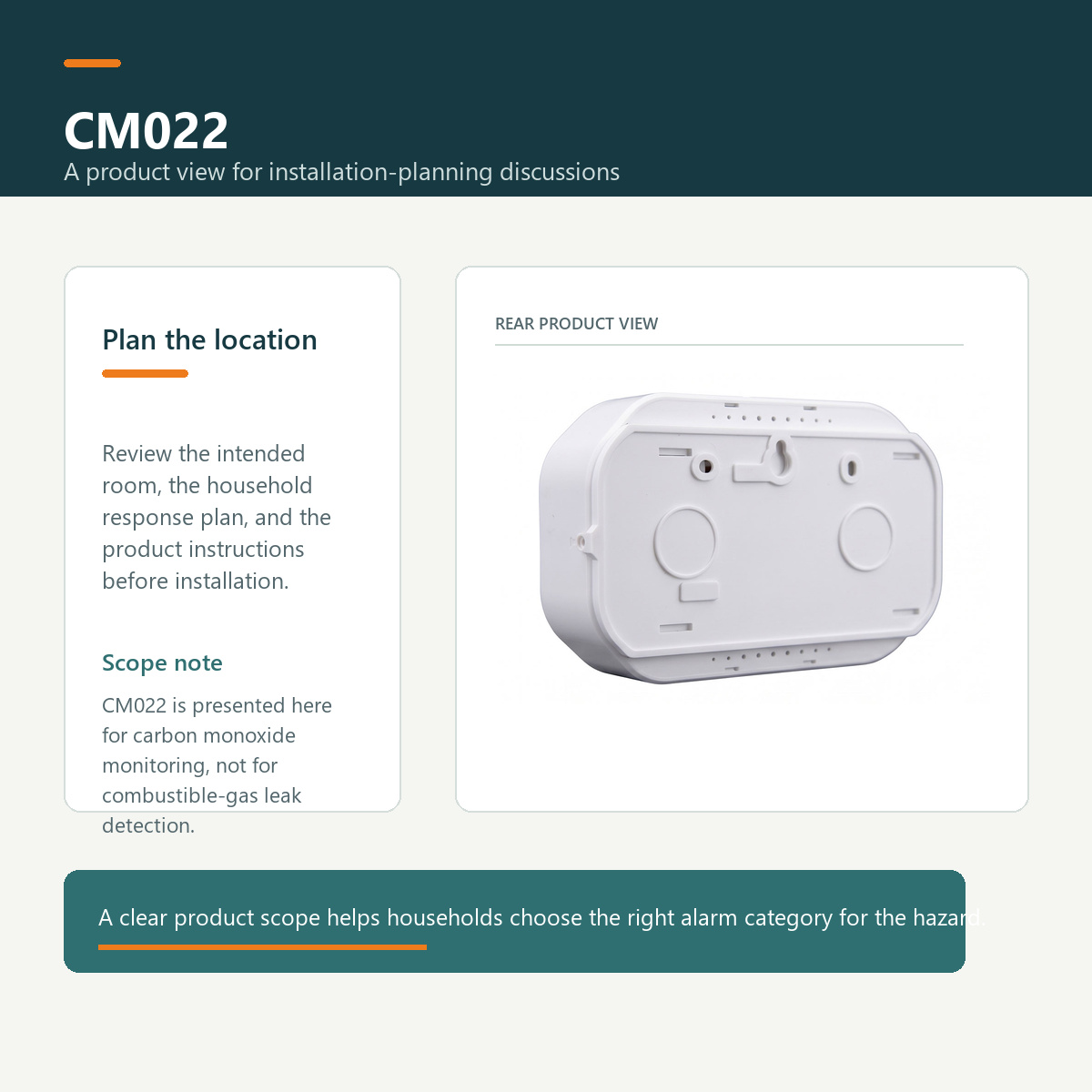
Plan the response before fitting the device
A household response plan is more useful when it is discussed before an alarm is installed. Residents and project managers can decide who will explain the alarm function, where the current installation guidance will be kept, and how occupants should respond according to the product instructions and local safety advice.
This also gives installers and buyers a clean way to separate product selection from assumptions. A battery-operated CO alarm may be appropriate for the intended space, but the decision should reflect the room, the possible CO source, the household routine, and the locally applicable installation requirements. Those details are better settled before a purchase order than after installation.
Questions worth including in a CM022 enquiry
- Which rooms and living arrangements does the project need to cover?
- Who will be responsible for explaining testing and maintenance to occupants?
- Which instructions, local guidance, and project requirements must be checked before installation?
- Does the buyer need a home-safety alarm for carbon monoxide, or a different product category for a different gas hazard?
PESV’s household gas alarm range provides the starting category context. For product-specific questions about the CM022, the PESV contact team can review the intended application and the information that still needs to be confirmed.
Make visible status part of the routine
A display and labelled indicators are most useful when the people living with the device know that they need occasional attention. The project handover should identify where the instructions are kept, who will review a fault indication, and which questions must be referred to an installer or other qualified service provider. That turns a product feature into a practical household habit.