
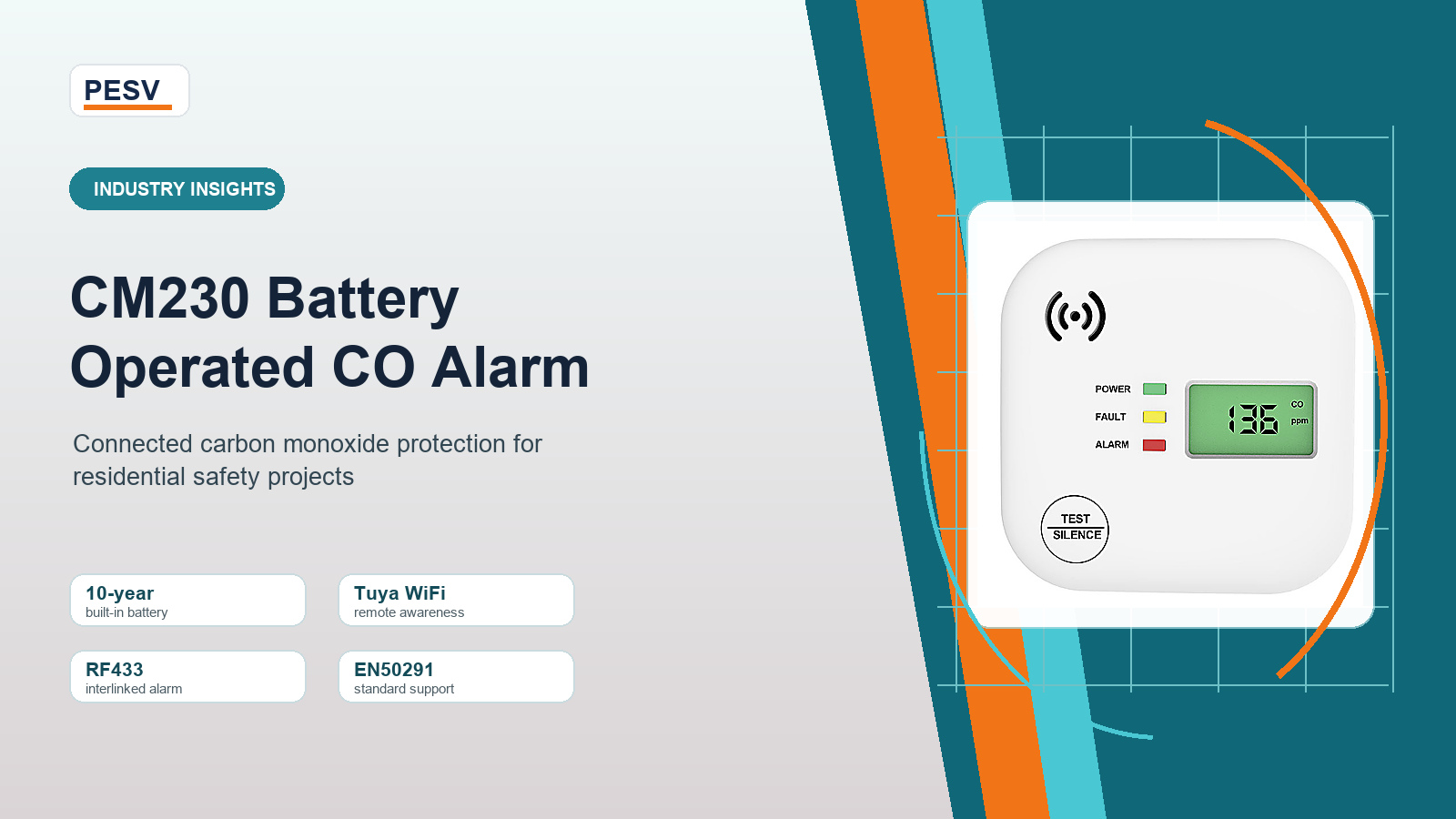
Carbon monoxide protection is easy to overlook because the risk is invisible until an alarm, inspection, or incident makes it urgent. For distributors, housing projects, smart-home brands, and safety buyers, a residential CO alarm is not only a device on a wall. It is part of a prevention routine that must keep working quietly in kitchens, corridors, rental units, hotel rooms, and other occupied spaces.
The CM230 battery operated CO alarm gives PESV customers a connected option for that routine. According to the official PESV product page, the model uses a high quality electrochemical sensor, a 10-year built-in battery, Tuya WiFi support, RF433 interlinking, and audible and visual alarms when carbon monoxide reaches the preset alarm level.
Why Battery CO Alarm Selection Still Matters
The CDC describes carbon monoxide as an odorless, colorless gas that can come from fuel-burning equipment, generators, grills, and similar sources. That is why a carbon monoxide safety plan should consider both equipment maintenance and alarm coverage rather than treating the alarm as a last-minute accessory.
A battery operated CO alarm can be especially useful where wiring is difficult, where existing rooms need a fast upgrade, or where property operators want a consistent product across different locations. The buyer still needs to confirm local installation requirements, but long-life power and clear alarm behavior can make the deployment easier to manage.
CM230 at a Glance
| Selection point | CM230 information listed by PESV |
|---|---|
| Measuring gas | Carbon monoxide |
| Sensor type | Electrochemical sensor |
| Power | DC3V, 10-year built-in battery |
| Sensor life | More than 10 years |
| Alarm level | Follows EN50291 standard |
| Alarm sound | At least 85dB at 3 meters |
| Connectivity | Tuya WiFi and RF433 interlinked function |
| Working environment | -10 to 50 degrees C; humidity below 95%RH |
The key purchasing point is balance. CM230 is not positioned as a complex industrial controller; it is a residential carbon monoxide alarm with practical power life, sensing, sound output, connectivity, and interlinking features that help home-safety projects move from single-device warning toward connected room-to-room awareness.
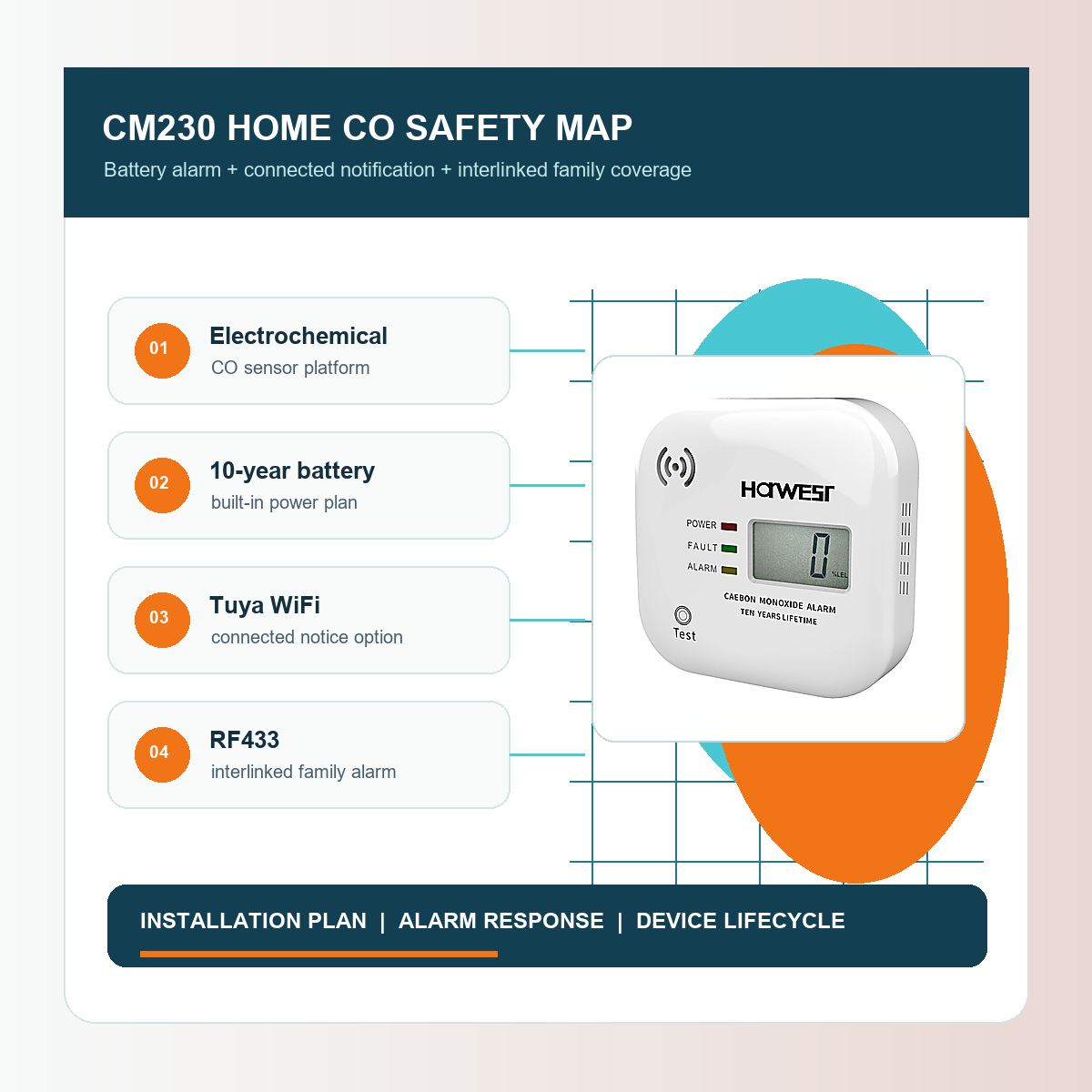
Where CM230 Fits in Home Safety Projects
For residential builders, hospitality buyers, property managers, distributors, and smart-home installers, CM230 can be discussed wherever a standalone carbon monoxide alarm needs to be simple for occupants yet clear enough for a managed safety program. Typical evaluation points include bedroom-adjacent areas, rooms near fuel-burning appliances, rental-property turnover, and smart notification requirements.
The Tuya application support listed by PESV can help users know about a carbon monoxide leakage situation from a connected device, while RF433 interlinking can help multiple alarms work together inside the same family environment. These functions should be confirmed against the final project configuration, network conditions, and destination-market expectations.
A Buyer Brief for Distributors and Project Teams
- Confirm whether the project needs WiFi, RF433 interlinking, or both.
- Define the rooms, floors, and occupied areas where CO alarms will be placed.
- Check destination-market requirements and requested standard documentation.
- Plan occupant instructions for alarm sound, visual indication, evacuation, and service response.
- Confirm packaging, labeling, quantity, delivery schedule, and distributor support needs.
The strongest quotation request is usually specific. A buyer who can describe the installation environment, preferred interlinking method, WiFi or non-WiFi requirement, labeling needs, order quantity, destination market, and documentation expectations will get a clearer recommendation than a buyer who only asks for a general CO alarm price.
How CM230 Supports a Practical Safety Routine
PESV lists an alarm sound of at least 85dB at 3 meters, an alarming level that follows the EN50291 standard, and compliance with EN50291-1:2018. In real use, those product details should be paired with installation instructions, routine testing, end-of-life planning, and clear occupant guidance on what to do when an alarm sounds.
For commercial buyers, this is also an operations question. A CO alarm program should define who installs the alarm, who records the location, who checks device status, who responds to alarms, and when replacement or maintenance is required. CM230 gives the hardware foundation; the project team still needs the workflow.
Frequently Asked Questions
What gas does CM230 measure?
CM230 is listed by PESV for carbon monoxide measurement. The official specifications identify the measuring gas as carbon monoxide and the sensor type as an electrochemical sensor.
Does CM230 support connected home use?
Yes. PESV lists Tuya WiFi support and RF433 interlinked function for CM230. Buyers should confirm the exact configuration and application requirements before ordering.
What information should a buyer confirm before purchase?
Confirm destination-market requirements, alarm standard expectations, interlinking method, app requirement, packaging or labeling needs, installation plan, and quantity schedule. PESV can then help match the CM230 battery operated CO alarm to the intended home-safety project.
Explore CM230 with PESV
Review the CM230 product page, compare the battery operated CO alarm range, browse household gas alarm options, read more about home safety applications, or contact PESV with your project requirements.