
Industry Watch
Industrial gas monitoring is becoming a stronger safety topic as factories, oil and gas sites, utilities, and chemical facilities face growing pressure to detect gas leaks earlier.
Recent industry coverage has focused on methane emissions, invisible gas plumes, oil and gas site leaks, and the limits of self-reported monitoring. These discussions show one clear direction: industrial operators need more reliable field-level detection, not only periodic inspections.
At the same time, regulations and safety standards continue to push companies toward better monitoring in high-risk areas such as confined spaces, process zones, storage areas, compressor stations, and pipeline-related facilities.
What Is Driving Gas Monitoring Demand
Gas detection is no longer only a basic alarm function.
For many industrial sites, it is becoming part of a wider safety and compliance system. Operators want faster leak awareness, clearer alarm response, and better visibility across risky work areas.
Recent methane-related reporting has also shown why continuous or site-level monitoring matters. Some emissions are difficult to see without dedicated equipment, and leaks may continue if detection depends only on occasional manual checks.
This is why search demand around gas leak detection, fixed gas detector, continuous gas monitoring, and industrial safety monitoring continues to grow.
Why Fixed Detection Still Matters
Portable gas detectors are important for workers, inspections, and confined-space entry.
But fixed gas detectors serve a different role. They are installed in selected monitoring points and can support continuous area awareness in places where gas leakage risk is persistent or operationally important.
For plants and industrial facilities, fixed detection is often relevant in:
- chemical processing areas
- oil and gas facilities
- boiler rooms and fuel gas areas
- storage and transfer zones
- pump rooms and compressor areas
- wastewater treatment sites
- confined or semi-confined industrial spaces
This makes fixed gas detection a practical part of long-term industrial safety planning.
Product Focus: GTQ-BS03
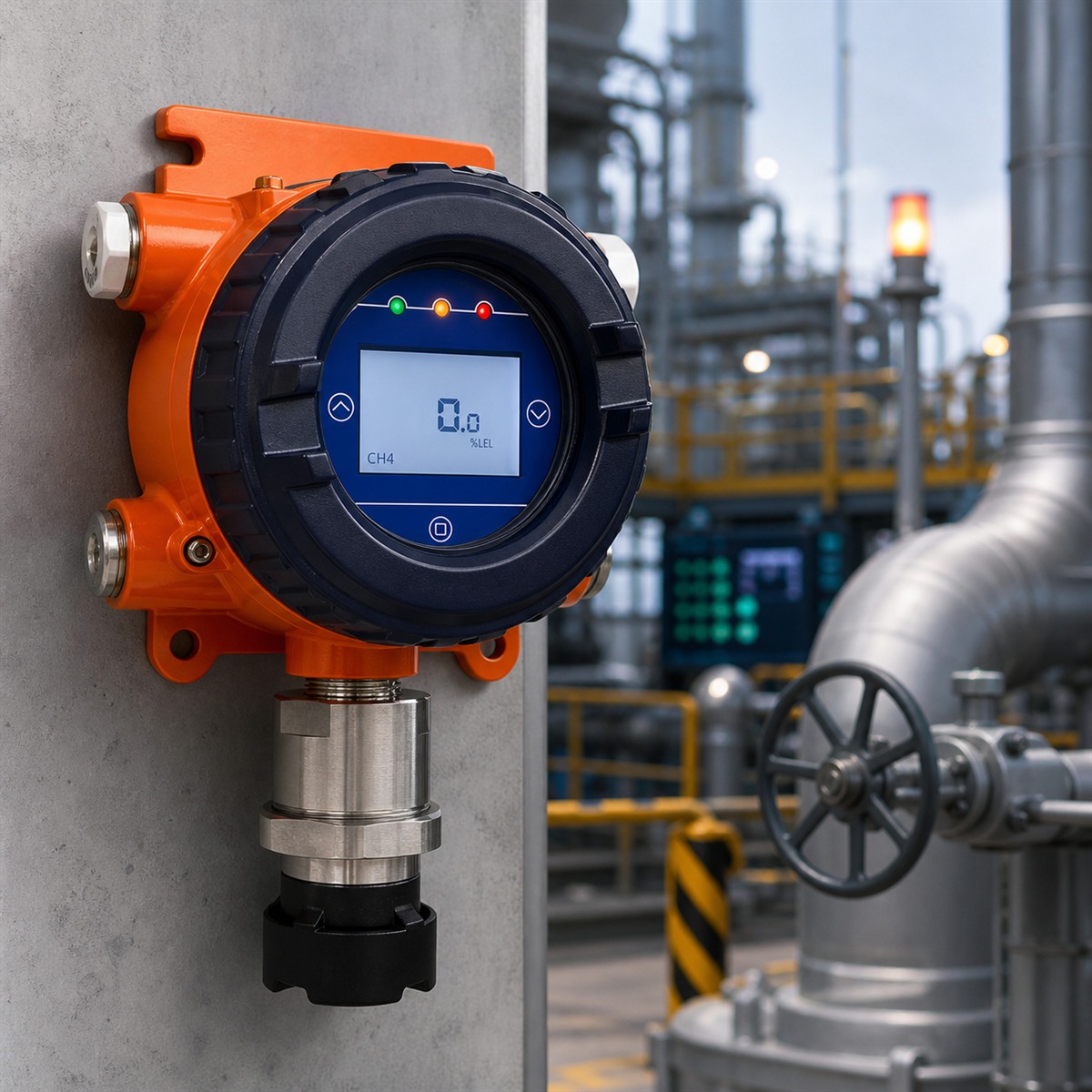
GTQ-BS03 Fixed Gas Detector fits this industry direction as a fixed gas detection product for industrial monitoring scenarios.
Based on the real product images, GTQ-BS03 features an orange industrial housing, a dark circular front bezel, a front display area, side cable connection points, and a lower metallic sensor module with a black sensor cap.
These visible features support its positioning as an industrial fixed gas detector for site monitoring applications.
To keep the content accurate, this article does not claim unverified specifications such as gas range, sensor type, communication protocol, explosion-proof certification, alarm output, accuracy, response time, or protection rating unless those details are confirmed from official GTQ-BS03 materials.
6 Safety Signals for Buyers
Signal 1: Methane Monitoring Is Under More Scrutiny
Recent reporting around methane plumes and oil and gas site emissions shows that invisible leaks remain a major concern.
For industrial buyers, this increases interest in gas detection systems that can support earlier awareness and better safety management.
Signal 2: Continuous Monitoring Is Becoming More Valuable
A key trend is the move from occasional inspection toward continuous monitoring.
Fixed gas detectors such as GTQ-BS03 can be positioned around this demand because they are designed for installed monitoring points rather than one-time manual checks.
Signal 3: Confined Space Risk Remains a Core Safety Driver
Confined spaces can contain hazardous atmospheres, oxygen deficiency, combustible gases, or toxic gases.
OSHA guidance continues to make confined-space safety a key reference point for industrial gas monitoring content.
Signal 4: Buyers Search by Application, Not Only Product Name
Many B2B buyers do not search only for a model number.
They search by need, such as gas leak detection, combustible gas detector, toxic gas monitoring, or industrial safety monitoring.
This means GTQ-BS03 content should connect product positioning with real monitoring scenarios.
Signal 5: Digital Monitoring and IoT Are Influencing Expectations
Research into IoT-based gas emission monitoring and digital-twin systems shows where the industry is moving.
Even when buyers are purchasing a fixed detector, they increasingly think about how gas monitoring data fits into a wider safety system.
Signal 6: Trustworthy Product Content Matters
Industrial safety buyers are cautious.
Overstated product claims can weaken trust. Better SEO content should combine current safety trends, real product images, careful product wording, and external reference links.
For GTQ-BS03, the strongest content angle is not exaggerated specifications. It is practical relevance to industrial gas monitoring and fixed gas detection.
Reference Links
For industry context, see these resources:
- The Guardian reported on methane plume monitoring and certification concerns.
- Le Monde reported on methane leaks around French oil and gas sites.
- EPA provides oil and natural gas air pollution control information.
- OSHA provides guidance on permit-required confined spaces.
- Recent research explores IoT and digital twin approaches for continuous gas emission monitoring.
Internal Resources for Buyers
Related PESV pages: