
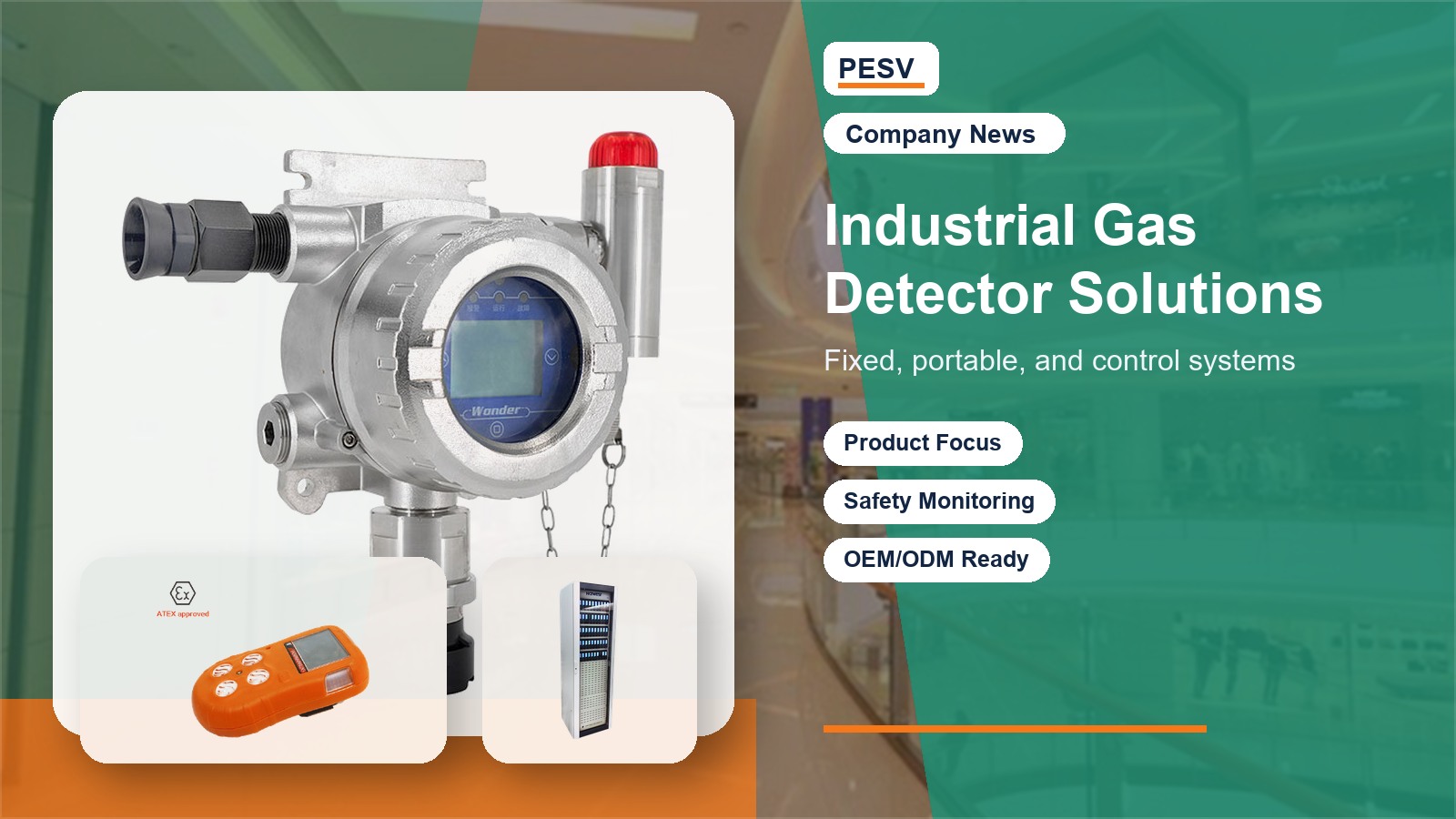
PESV is highlighting its industrial gas detector solutions for customers who need dependable safety monitoring across production sites, storage zones, confined spaces, facility protection projects, and other industrial environments.
This Company News update summarizes how the PESV Industrial Gas Detectors category can support buyers who are reviewing fixed detection, control panels, gas leak inspection tools, and portable gas detection equipment for industrial safety applications.

Why PESV Is Sharing This Industrial Gas Detector Update
Industrial safety buyers often compare gas detection products from several angles at the same time. They need to understand the gas risk, the installation point, the alarm response process, and the maintenance plan before selecting a device. A single product page is useful, but a solution-level view helps buyers connect the product category with the working environment.
On the PESV website, the Industrial Gas Detectors category is organized around several practical product groups. This makes it easier for distributors, system integrators, and safety teams to review fixed gas detector options, gas control panel options, gas leak detectors, and portable gas detectors in one product direction.
Product Groups Covered in the Industrial Gas Detectors Category
According to the current PESV product category page, the Industrial Gas Detectors section includes fixed gas detector models such as GTQ-WD6200, GTQ-WD2200, and GTQ-BS03. It also includes gas control panels, handheld laser methane detectors, portable multi gas detectors, and portable single gas detectors.
| Product group | Examples shown on PESV website | Typical role |
|---|---|---|
| Fixed Gas Detector | GTQ-WD6200, GTQ-WD2200, GTQ-BS03 | Continuous point monitoring in selected industrial risk areas. |
| Gas Control Panel | KB2160 Gas Control Panel | Centralized signal display and alarm management for multi-point gas detection. |
| Gas Leak Detector | HRLD600, HRLD200 handheld laser methane detectors | Field inspection support for gas leak checking and patrol work. |
| Portable Multi Gas Detector | E6000, E4000, BX616 | Portable multi-gas checking for maintenance, inspection, and site safety tasks. |
| Portable Single Gas Detector | BTYQ-E110, BZ100 | Single-gas monitoring options for targeted worker safety needs. |
Connecting Products With Industrial Safety Applications
PESV also presents Industrial Safety as one of its application directions. The website lists application areas including Fire Brigade, police, army, Confined Space Gas Detection, Chemical and Petrochemical Industry, and Facility Protection. These scenarios show why buyers often need more than one type of gas detection equipment.
For example, a fixed gas detector can support continuous monitoring at selected points. A gas control panel can help teams manage signals from multiple points. A handheld laser methane detector can support inspection and patrol work. A portable multi gas detector can help with maintenance checks or confined-space-related work where personnel need on-site measurement.
A Practical Selection Workflow for Buyers
PESV recommends that buyers start from the application rather than from the model name alone. The right industrial gas detector depends on the gas to be monitored, the environment where the device will be used, the alarm strategy, the expected maintenance process, and any project-specific requirements.
- Define the target gas and monitoring purpose before comparing products.
- Decide whether the task requires continuous fixed monitoring, portable inspection, or both.
- Review whether a gas control panel is needed for centralized alarm management.
- Confirm installation conditions, power supply, signal output, and maintenance access with the supplier.
- Avoid assuming one model fits every site; industrial gas detection should match the actual safety workflow.
For customers reviewing process safety practices, the OSHA process safety management overview is a useful public reference. Final project requirements should still follow local regulations, site standards, and confirmed technical specifications.
How This Update Supports Global Distributors and Safety Customers
PESV serves customers looking for professional equipment and safety value across several product directions, including alcohol testers, industrial gas detectors, household gas alarms, and power sector safety products. For global distributors, a clearly organized industrial gas detector portfolio helps simplify product communication with end users.
This update is also intended to help safety managers and purchasing teams ask better questions during early selection. Instead of only asking for a price, buyers can clarify the gas risk, installation point, alarm method, service plan, and whether the project needs fixed gas detection, portable gas detection, or an integrated combination.
Next Step: Review PESV Industrial Gas Detectors
Buyers can review the PESV Industrial Gas Detectors category to compare fixed gas detector models, gas control panels, gas leak detectors, and portable gas detectors. They can also visit the Industrial Safety applications page for application context.
For product selection, distributor cooperation, or project-specific questions, contact PESV with the target gas, application environment, and expected monitoring method. The PESV team can help customers review suitable product directions before final model confirmation.
FAQ: PESV Industrial Gas Detector Solutions
What industrial gas detector products are shown on the PESV website?
PESV lists fixed gas detector models, gas control panels, gas leak detectors, portable multi gas detectors, and portable single gas detectors under its Industrial Gas Detectors category.
Which industrial safety application areas does PESV mention?
The PESV Industrial Safety application page lists Fire Brigade, police, army, Confined Space Gas Detection, Chemical and Petrochemical Industry, and Facility Protection.
How should buyers start selecting an industrial gas detector?
Buyers should begin with the target gas, installation environment, alarm strategy, maintenance requirements, and whether the task needs fixed monitoring, portable inspection, or both.