
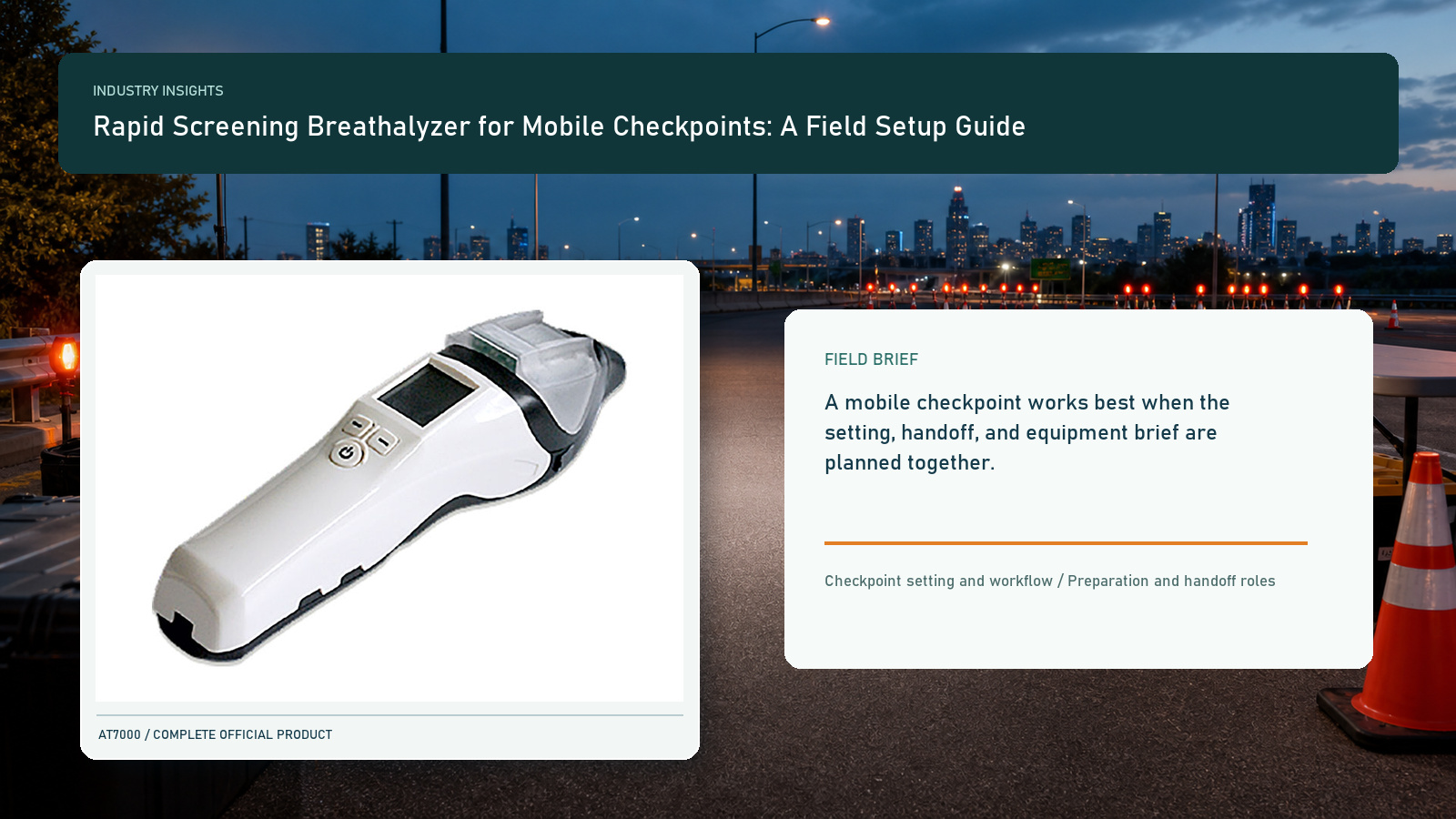
A rapid screening breathalyzer for mobile checkpoints should start with the practical context rather than an assumed specification. For field teams, traffic-safety projects, and distributors, the useful first questions are who will use the equipment, where it will be discussed or deployed, which information must be reviewed, and what the buyer needs to confirm before asking for a final direction.
The relevant PESV product and article reference provides a starting point for the discussion. It should be considered alongside the buyer’s own process, destination-market needs, and confirmed project requirements. A product reference does not by itself define a final procedure, legal conclusion, or deployment decision.
Rapid Screening Breathalyzer For Mobile Checkpoints: Start with the Buyer Brief
A mobile checkpoint works best when the setting, handoff, and equipment brief are planned together. Record the operating setting, intended user group, destination market, expected quantity, requested documents, packaging questions, delivery timing, and responsible contact. This gives suppliers and internal reviewers one shared record instead of several disconnected enquiries.
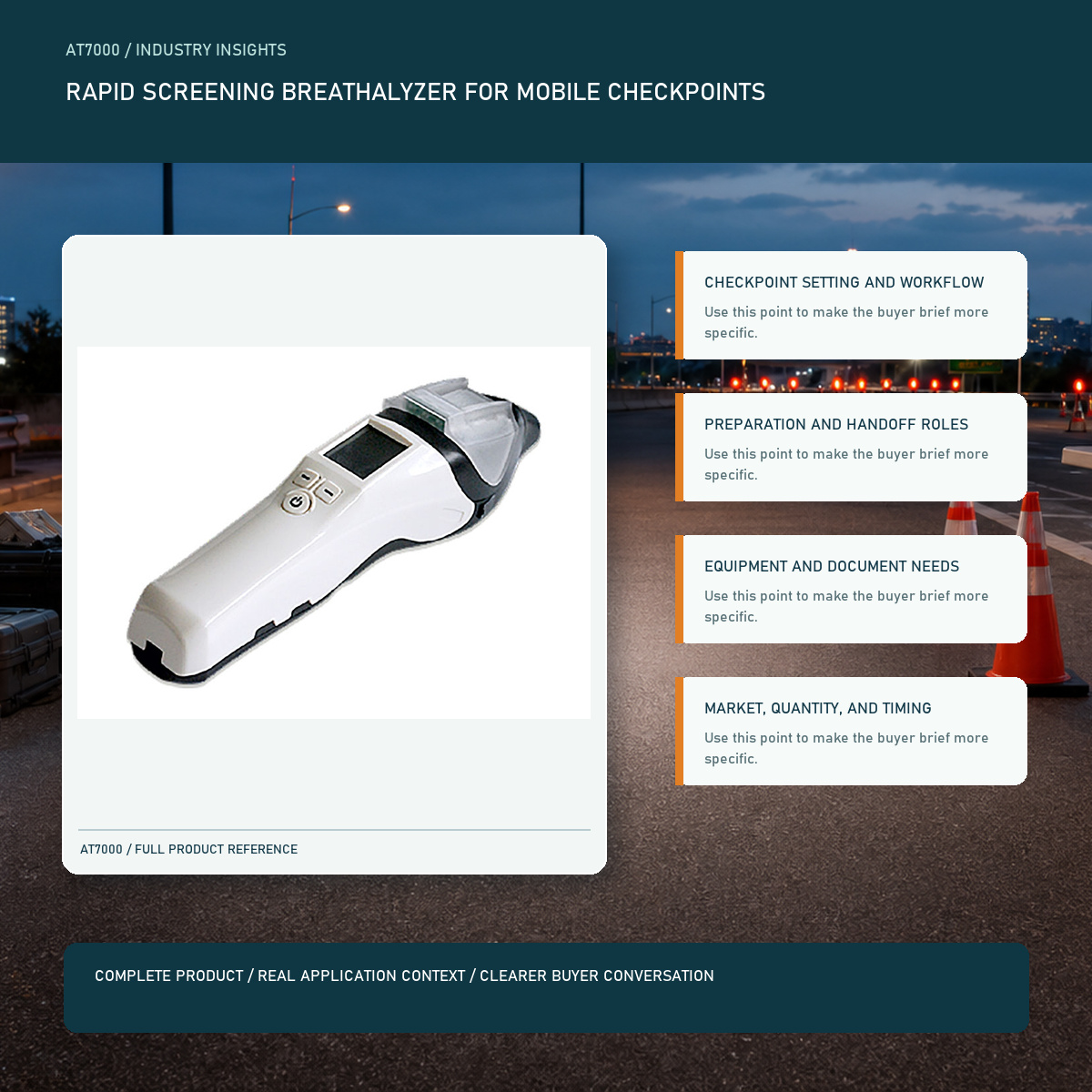
- Checkpoint setting and workflow: confirm the buyer’s relevant requirements before final product or commercial decisions.
- Preparation and handoff roles: confirm the buyer’s relevant requirements before final product or commercial decisions.
- Equipment and document needs: confirm the buyer’s relevant requirements before final product or commercial decisions.
- Market, quantity, and timing: confirm the buyer’s relevant requirements before final product or commercial decisions.
Keep Product Context and Project Decisions Separate
Equipment information can support a more focused conversation, but the buyer should still separate confirmed project facts from assumptions. The related PESV reference article helps place this topic in a wider product or buyer context. The PESV Alcohol Tester range is useful when the discussion needs to compare the appropriate product class before a detailed commercial enquiry.
Make the Next Supplier Conversation More Useful
A clear request describes the application, market, desired product information, quantity, packaging expectations, target delivery window, and the questions still awaiting confirmation. For a broader application frame, review PESV Breathalyzer Applications. Then contact PESV with the details that matter to the actual project.
Use Alcohol-Testing Context Responsibly
Alcohol-related safety is an important subject, but an equipment article should not overstate what a product or workflow can establish. The World Health Organization alcohol fact sheet provides broader health context. Buyers should apply their own approved procedures and confirm local requirements for their particular setting.
Frequently Asked Questions
What should a buyer include in a rapid screening breathalyzer for mobile checkpoints discussion?
Include the intended setting, user group, destination market, information request, quantity, delivery timing, and the person responsible for review.
Does this rapid screening breathalyzer for mobile checkpoints guide create a final operating procedure?
No. Each organization should approve its own operating process and confirm applicable local requirements for the actual use case.
What should be shared with PESV?
Share the intended application, market, requested documentation, quantity, timing, packaging needs, and open questions for the project.