
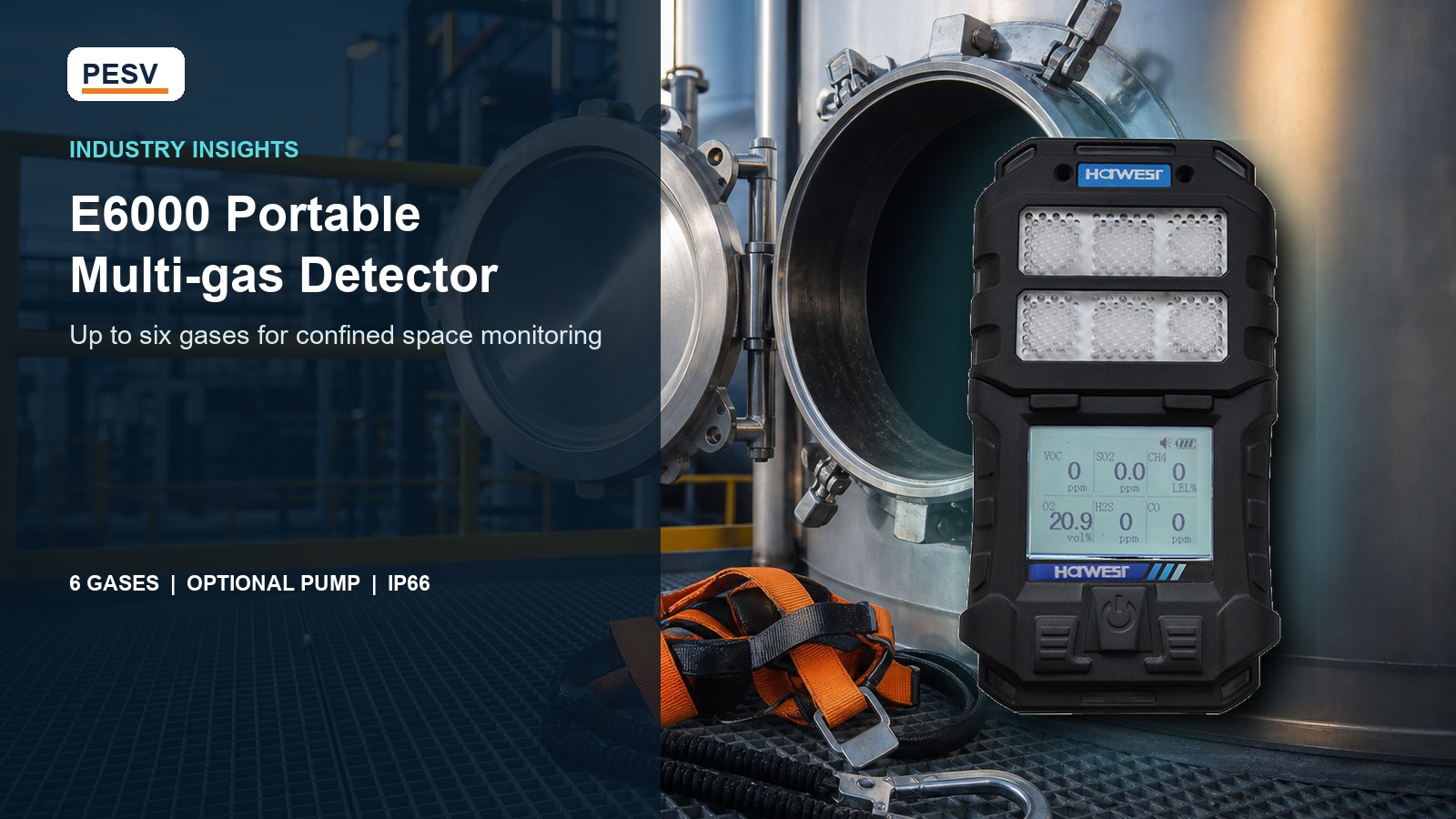
The E6000 Portable Multi-gas Detector (6 gases maximum) is designed for teams that need to evaluate multiple atmospheric hazards at one work location. PESV lists E6000 as a portable instrument that can measure up to six gases simultaneously, helping safety teams configure oxygen, toxic-gas, and combustible-gas monitoring around the actual task.
For confined spaces, process vessels, utility rooms, maintenance areas, and other controlled work zones, gas monitoring should be part of the approved entry and work procedure. The detector does not replace a site risk assessment, ventilation plan, communication plan, or rescue planning; it supports informed decisions before and during the task.
Why Multi-gas Monitoring Matters Before Entry
Atmospheric conditions can vary by location, process, ventilation, and time. A portable multi-gas detector allows the operator to check for the specific hazards identified by the site. OSHA provides an overview of confined-space hazards and direct-reading portable gas-monitor guidance; project teams should also follow applicable local rules and their own entry procedures.
E6000 can be configured for flammable gas, toxic gas, and oxygen measurement. The chosen sensors, ranges, alarm settings, and calibration plan should be confirmed before deployment. This approach is more useful than treating every inspection location as having the same atmospheric risk.
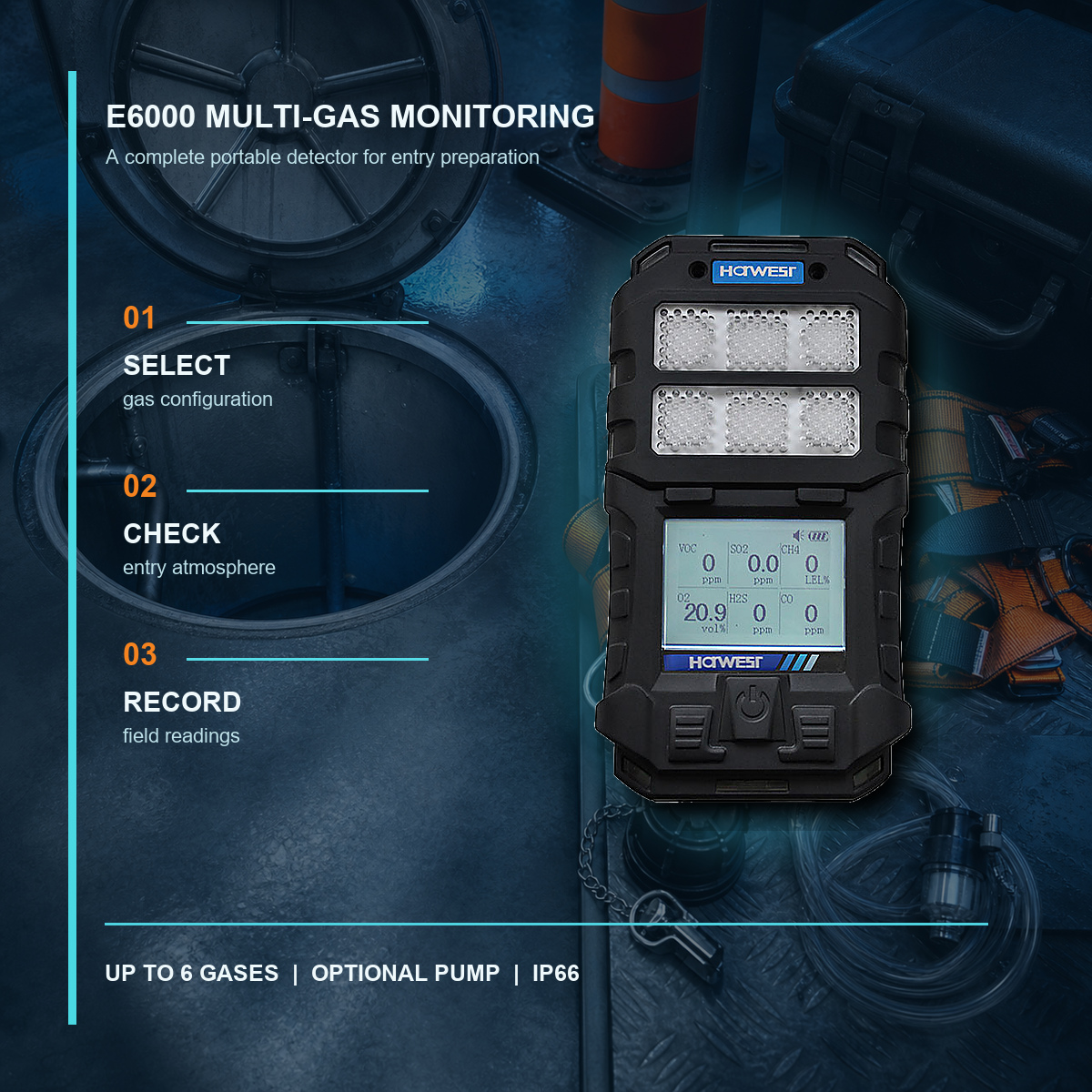
E6000 Portable Multi-gas Detector: Published Features
- Up to six gases measured simultaneously
- Interchangeable smart sensor modules
- Natural diffusion measurement or optional built-in pump sampling
- Visual, audible, and vibration alarm
- Adjustable alarm levels and span calibration values
- Self-test, self-diagnostic functions, real-time clock, and event logging
- IP66 protection and intrinsically safe construction
Sensor Configuration and Sampling Method
PESV lists catalytic, electrochemical, NDIR, and PID sensor types for E6000 configurations. Interchangeable smart sensor modules can support maintenance planning, but the final detector configuration must match the gases and ranges required at the worksite. Ask for the relevant gas list when specifying an order.
Natural diffusion measurement can suit direct ambient monitoring around the worker. The optional built-in sampling pump can be considered where a probe or sampling line is needed to reach a monitoring point. Sampling method, tubing, response expectations, and bump-test procedures should be selected according to the site protocol.
Key Published Technical Data
| Item | Published E6000 information |
|---|---|
| Measuring capacity | Up to six gases simultaneously |
| Sensor types | Catalytic, electrochemical, NDIR, and PID |
| Sampling | Natural diffusion or optional pump sampling |
| Alarm | Visual, audible, and vibration; audible at or above 80dB at 1m |
| Battery / records | DC3.6V 6600mAh lithium-ion battery / 100,000 events |
| Protection | IP66; intrinsically safe construction |
| Size / weight | 168 x 91 x 45 mm / about 500 g |
Practical Selection Checklist
- Identify the target gases and required ranges for the work area.
- Select the sensor combination and confirm whether up to six channels are needed.
- Choose natural diffusion or optional pump sampling based on the inspection point.
- Confirm alarm thresholds, calibration intervals, bump-test process, and recordkeeping.
- Review charging, accessories, enclosure protection, and the site’s operating environment.
- Document how readings and alarms fit into the approved entry and response procedure.
Related Resources and Project Support
Explore portable multi-gas detectors, browse industrial gas detectors, or review PESV industrial safety applications. For U.S. reference material, OSHA’s permit-required confined-space standard is a useful starting point for understanding its regulatory context.
Contact PESV with the target gases, ranges, sampling needs, and application conditions so that the E6000 configuration and related accessories can be reviewed for your project.