
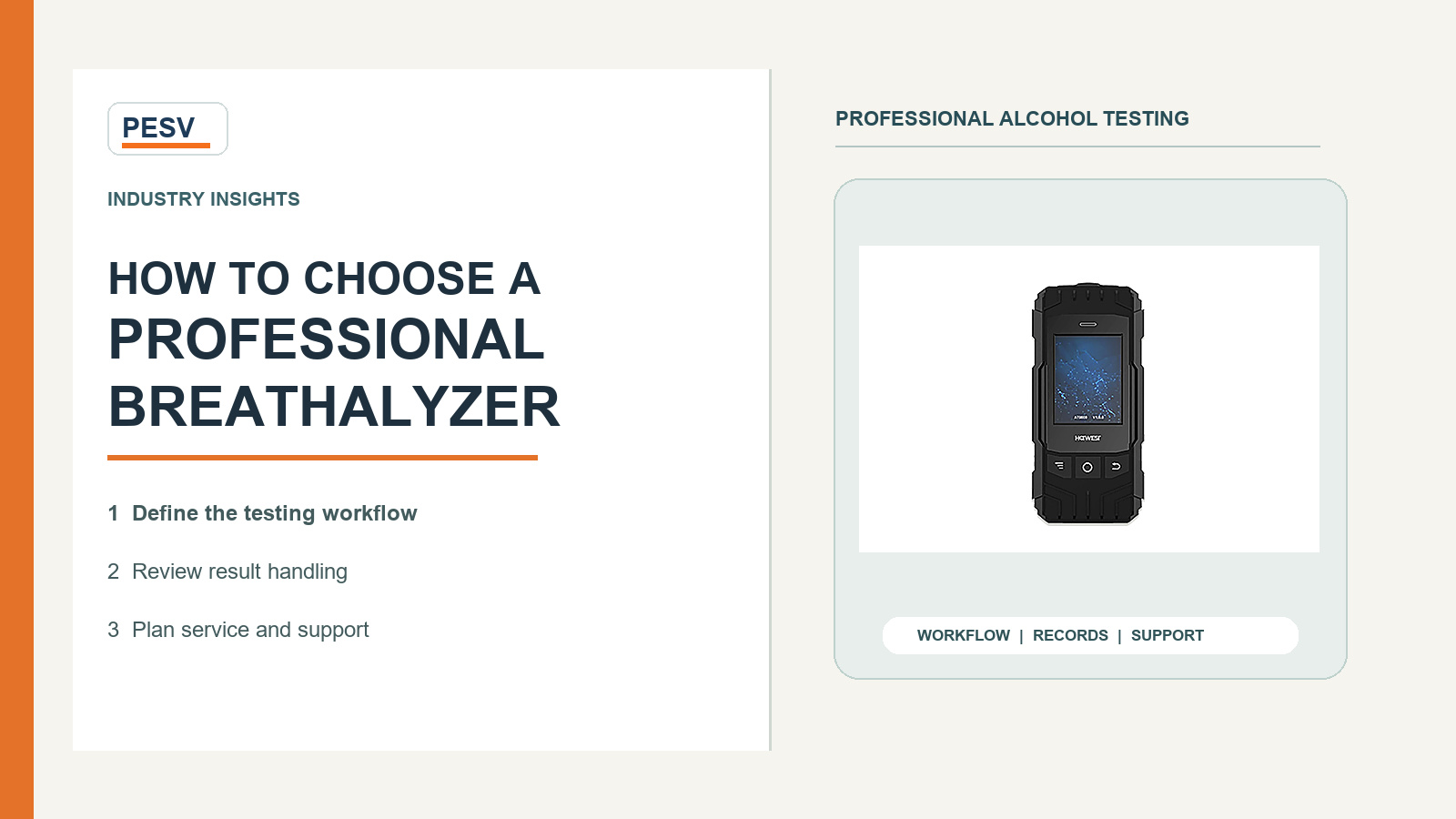
Choosing a professional breathalyzer is not simply a matter of selecting a device with a display. Law-enforcement buyers, workplace safety teams, and distributors need to match testing workflow, result handling, operator needs, and the service plan to the project. This guide explains how to choose a professional breathalyzer without treating every application as the same.
Start With the Testing Workflow
Define where, by whom, and how often testing will occur. A roadside or checkpoint workflow may prioritize repeatable screening and practical handling. A workplace alcohol testing program may need a clear process for shift checks, contractor access, result review, and escalation. Start with the operating process, not a specification list.
Buyers should also define whether a device is intended for an initial screening step, a more formal testing process, or a program that combines both. Local procedures, required units, and documentation expectations should be confirmed before a model is selected.
Compare the Features That Affect Daily Use
Professional breathalyzer selection often involves more than a sensor. Consider the operator interface, testing method, result visibility, record review, printing or data-transfer needs, charging routine, mouthpiece supply, and calibration support. Each item affects how consistently a team can use the equipment in real conditions.
PESV professional models such as the AT8801 law enforcement breathalyzer and the AT9000 police breathalyzer with camera illustrate why buyers should review the full workflow instead of comparing only one feature.
Make Result Handling Part of the Decision
For a professional alcohol tester, result handling can be as important as the test itself. Some projects need a clear on-device reading; others need record review, printer compatibility, data transfer, language options, or a defined supervisor handoff. Identify who needs to see the result, what follow-up is expected, and whether the team must retain records before finalizing the configuration.
Plan Service, Consumables, and Training Before Purchase
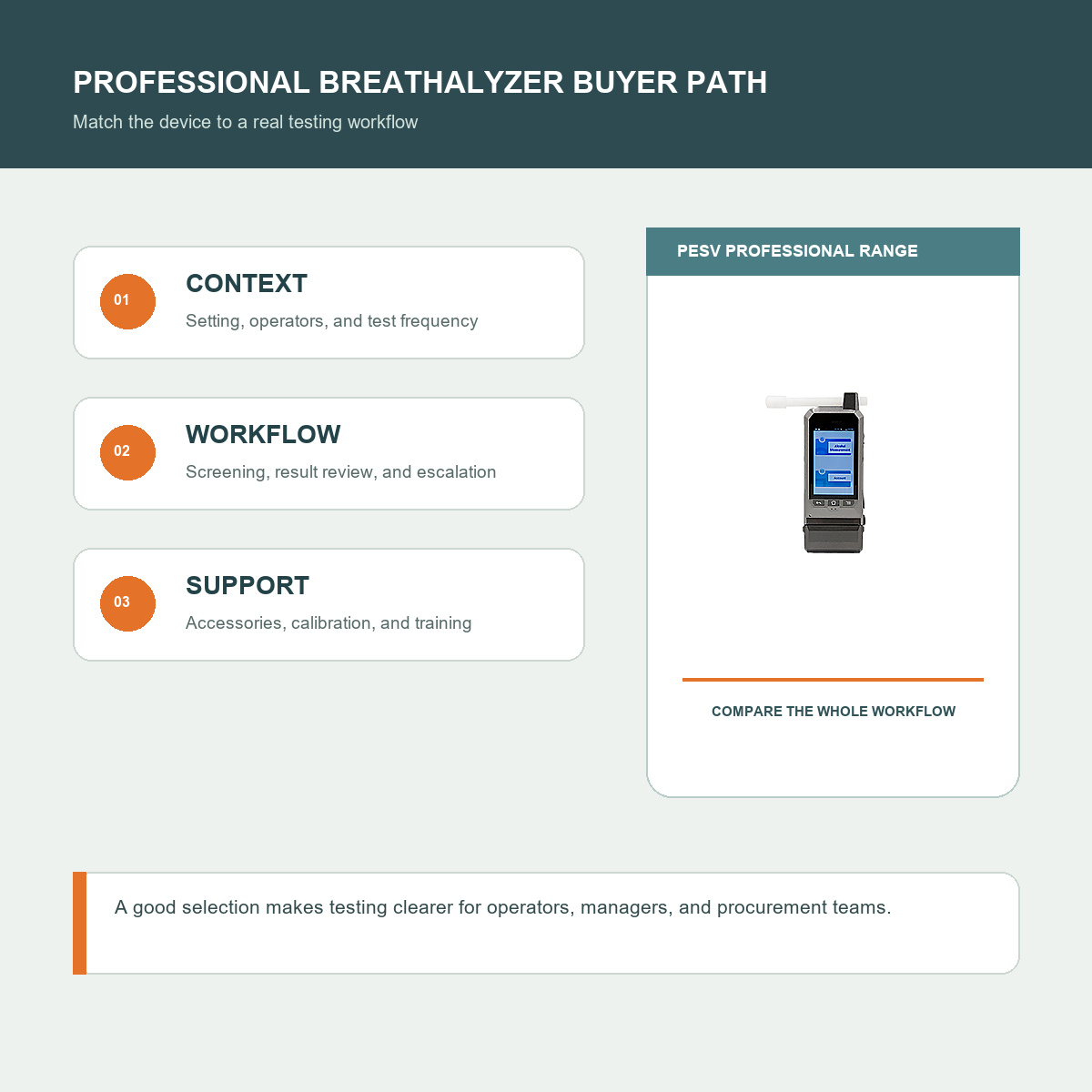
A dependable procurement plan should include calibration arrangements, accessory supply, operator training, product documentation, destination-market requirements, and post-sale support. These practical items prevent a suitable device from becoming difficult to operate after delivery.
A Practical Buyer Checklist
- Confirm the testing setting and operator workflow.
- Define screening, result review, and follow-up steps.
- Check required units, language, record, printing, and data needs.
- Confirm calibration, consumables, training, and service expectations.
- Review destination-market procedures and documentation.
Explore the PESV Professional Breathalyzer Range
Browse the PESV Professional Breathalyzer range, view the wider Alcohol Tester category, explore breathalyzer applications, or contact PESV for model-selection support. For wider alcohol-safety context, see the WHO alcohol fact sheet.